AuthBridge-footer-logo
Hiring Trends in India: Insights from Workforce Fraud Files H1 FY26

Hiring Trends in India: Insights from Workforce Fraud Files H1 FY26

Introduction

With the introduction of digital processes, hiring in India has become quick and scalable. However, faster hiring often comes with risk, because many candidates still provide incorrect or incomplete information. These gaps affect trust, compliance, and overall business stability, which later creates problems for organisations. 

The Workforce Fraud Files – H1 26 by AuthBridge highlights how widespread these issues continue across both white-collar and gig roles. The findings provide a clear view of where hiring gaps exist and why stronger background verification is now more important than ever.

What Are Hiring Discrepancies?

Hiring discrepancies refer to differences between the information provided by a candidate and the results revealed by verification checks. For example, these may include incorrect job history, fake education details, and mismatched information.

These gaps often appear during the employee background check India process and can affect hiring decisions if not identified early. 
Commenting on the partnership, Mr Ajay Trehan, Founder & CEO of AuthBridge, said,

"The H1 FY26 Workforce Fraud Files clearly show that hiring-related discrepancies remain a persistent and structural challenge. Despite faster and more digitised hiring workflows, we continue to see gaps in fundamental checks such as employment history, address, and education. These are not minor inconsistencies; they have direct implications for organisational risk, compliance, and trust. The data reinforces the need for organisations to embed background verification deeply into their hiring and workforce management strategies, rather than treating it as a one-time or post-hiring formality.”

Where Do Discrepancies Happen?

Employment Verification

Employment verification reveals the highest number of discrepancies. Many candidates misreport their roles, tenure, or salary to improve their chances of being hired. This often occurs due to intense market competition and increased hiring demand. In many cases, frequent job changes or short stints also make verification difficult. 

Address Verification

Address mismatches remain high across roles. This occurs because people often move to different cities for work or stay in temporary housing. In some cases, candidates also provide outdated, incorrect, or incomplete address details, which creates gaps during verification and makes the process more challenging. 

Education Verification

Education discrepancies continue to be a concern. Some candidates provide incorrect degree details or list institutions that cannot be verified. This often occurs because they feel pressure to meet job requirements or stand out in a competitive market.

Identity & Criminal Checks

Identity and criminal record discrepancies are less common compared to other checks, but are still critical. Even a small issue in identity verification can create serious risks, especially for roles that involve customer interaction or field operations. 

White-Collar Workforce Vs Gig Workers

White-Collar Workforce

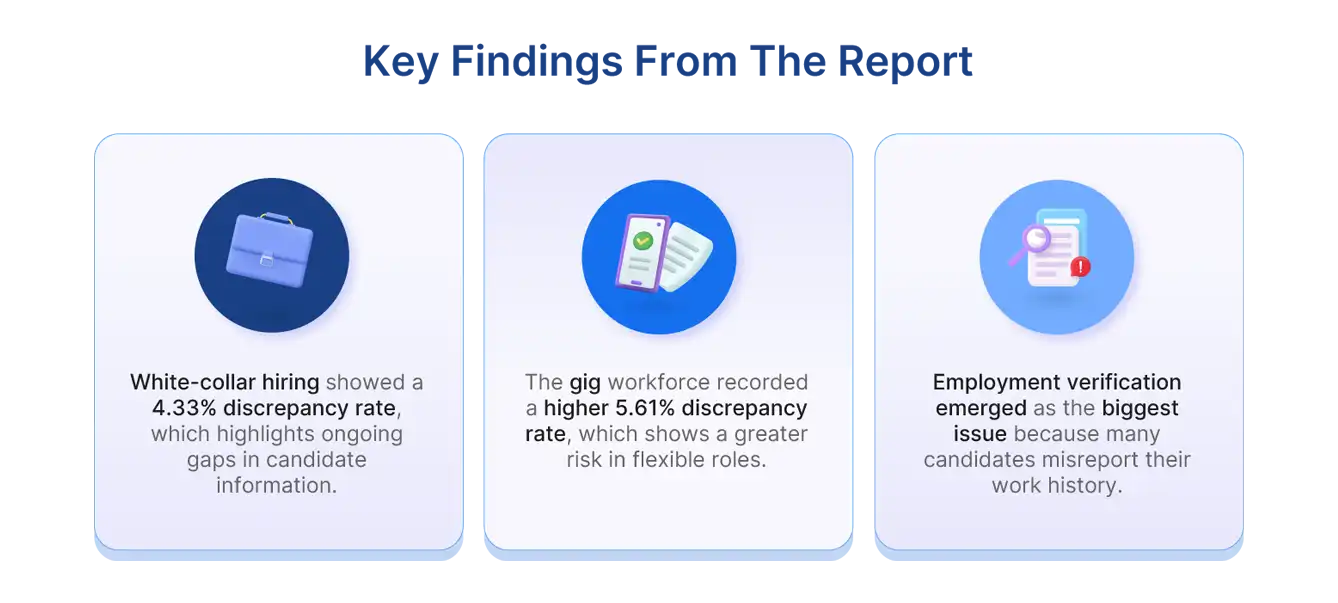
Discrepancies in white-collar workers follow a more structured pattern. The overall discrepancy rate is 4.33%, which shows that gaps still exist even in formal hiring processes.

Employment verification remains the biggest concern. Around 1 in 10 candidates fail these checks, often due to inflated roles, incorrect salaries, or unverifiable experience. This trend highlights the growing pressure to secure well-paying jobs. 

Address mismatches stand at 7.7%, while 4.5% of education checks show discrepancies. However, this risk is no longer limited to documents. Behaviour-related issues are rising. For example, 1.9% of employees were found to be using prohibited substances, which shows a clear shift in risk patterns.

Court record checks show a smaller discrepancy rate of 0.5%, but they still matter because they point to legal issues that can affect trust.

Overall, this shows that organisations need to look beyond documents and focus on both what candidates claim and their conduct. 

Gig Workforce

The gig workforce shows a different type of risk. The overall discrepancy rate is higher at 6%, which reflects greater challenges in verification.

Address verification is the biggest concern, with a 9.7% discrepancy rate. This often happens due to untraceable locations or a lack of response during checks.

Identity checks show a 2.5% failure rate, usually because of fake documents or misuse of identification. This leads to missing or incorrect records in official systems.

Court record checks stand at 2.2%, including serious cases such as theft or assault. Because gig roles involve direct customer interaction, these risks can directly affect safety and trust.

Key Comparison

Both segments show hiring discrepancies, but the nature of the risk is different. White-collar roles face more structured issues in employment and education details. However, gig roles carry higher operational risk because identity and address checks directly affect daily work and customer safety.

Therefore, organisations should avoid a one-size-fits-all approach and instead use role-specific background screening strategies. 

Industry-Wise Insights

Hiring discrepancies appear across industries, but the level of risk depends on the type of work. For example, customer-facing roles require stronger checks because they can directly impact trust and safety. 

IT / BPO / ITES

The tech sector shows a mix of document-related and behavioural risks.

  • 12.02% address mismatches appear due to untraceable locations or a lack of verification
  • 5.26% employment discrepancies include inflated salaries and incorrect job roles
  • 3.55% education issues, including unverifiable degrees
  • 1.75% drug test failures, which show a growing behavioural concern
  • 0.58% court record cases, including disputes, fraud, or pending litigation

Because many roles handle sensitive data, even small gaps can affect trust and security.

BFSI / Financial Services

The BFSI sector shows high risk because roles involve direct access to money and financial systems.

  • 13% employment discrepancies, with more than 1 in 10 candidates misreporting details
  • 10.23% address mismatches, often due to inaccurate records
  • 2.93% education discrepancies, including fake or unrecognised degrees
  • 1.17% identity verification issues, which raise serious fraud concerns
  • 1% court record discrepancies

      These risks are critical because even a single error can lead to financial loss or compliance issues.

      Retail

      Retail hiring happens at speed and scale, which increases the chance of discrepancies.

      • 1 in 6 candidates fail employment verification, often due to incorrect experience or salary details
      • 10.64% address mismatches, linked to frequent relocations
      • 9.16% education discrepancies, with many candidates faking diplomas

      This is important because retail roles often involve customers and transactions, and trust plays a key role here.

      Pharma

      The pharma sector faces challenges due to its large and distributed workforce, especially in field roles.

      • 11.21% address discrepancies, showing difficulty in verifying remote locations
      • 12.1% employment discrepancies, mainly due to misreported experience
      • 1.75% education mismatches, including fake diplomas
      • 0.19% court record cases, which may seem low but still carry a serious risk

      These gaps are important because the sector is highly regulated and depends on accuracy and compliance.

      Telecom

      The telecom sector shows some of the highest discrepancy rates across industries.

      • 15.42% address mismatches, the highest among all sectors
      • 14.32% employment discrepancies, including contract violations and incorrect job details
      • 7.8% education mismatches, showing rising credential fraud
      • 2.3% court record discrepancies, the highest among industries

      This risk is high because many roles involve field-based work and direct customer interaction. Because of this, trust and proper verification become even more important. 

      What This Means

      Discrepancies are not limited to one sector. However, the level of risk depends on the nature of the role. For example, customer-facing and field roles require stronger checks because they directly impact safety and trust.

      Because of this, organisations should adapt their employee background check and background screening approach based on industry needs, instead of using the same process everywhere.

      Why HR Leaders Need to Take Hiring Risks Seriously

      Hiring discrepancies are not just small errors. They can create serious problems for organisations if left unchecked.

      a. Impact Trust

      When employee information is incorrect, it becomes harder for organisations to rely on their workforce. Over time, this can impact team performance and company culture.

      b. Creates Compliance Risks

      Many industries follow strict rules, especially sectors like BFSI, telecom, and pharma. If verification gaps go unnoticed, organisations may face legal issues or penalties.

      c. Affects Customer Safety

      This is especially important in roles that involve direct interaction with customers. For example, in gig or field roles, even a minor identity or background issue can pose serious risks.

      Because of this, background verification is not just a formality. It plays a key role in building a safe, reliable, and compliant workforce.

      What Organisations Should Do

      Organisations need to take a more proactive approach to reduce hiring risks. A one-time check is not enough anymore, because workforce patterns and risks keep changing.

      1. Start background verification early in the hiring process. This helps identify issues before making an offer, which saves time and avoids rework later.
      2. Use continuous monitoring instead of relying on a single check. For example, periodic checks on criminal records or compliance status can help track risks over time.
      3. Customise checks based on the role. A field executive, for instance, may need stronger identity verification, while a finance role may require deeper employment verification.
      4. Use digital verification platforms for background screening to make the process faster and more reliable. These platforms help store verified credentials, reduce repeat work, and improve accuracy across hiring cycles. 

            This is where solutions offered by AuthBridge support organisations in building a more secure and efficient verification process.

            Because hiring is becoming faster and more complex, organisations need systems that are both quick and reliable.

            Conclusion

            Hiring risks are changing as the workforce becomes more dynamic and digital. However, verification processes have not always kept pace with these changes.

            Organisations need to move beyond one-time checks and adopt a more continuous approach. This helps them stay prepared for risks that may appear even after hiring.

            In the end, building a reliable workforce depends on consistent and accurate verification. Trust is not created in a single step; it needs to be maintained over time.

            criminal record verification

            Criminal Record Check in India: What It Is, How It Works, and Why It Matters

            Introduction

            When organisations hire someone, they’re not just evaluating skills on a résumé. They’re extending trust. A criminal record check is one of the most reliable tools available to verify that this trust is well-placed. Whether you’re onboarding a wealth manager, a delivery executive, or a field sales agent, knowing whether a candidate carries unresolved legal history is no longer optional. It’s a baseline standard of responsible hiring. This blog walks through what a criminal background check involves, how it is conducted in India, what it examines, and which industries rely on it most.

            What Is a Criminal Record Check?

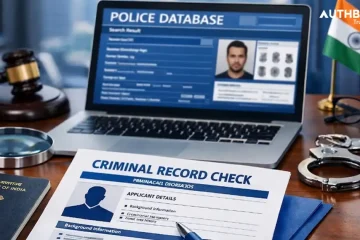
            A criminal record check, also referred to as a criminal background check, is a formal verification process that examines an individual’s legal history to determine whether they have been involved in criminal proceedings, either as an accused or as part of a documented legal matter.

            In India, unlike some jurisdictions with centralised criminal databases, this check draws from multiple sources: court records and judgement copies, FIR (First Information Report) filings, and proprietary legal databases maintained by specialist verification firms. The result is a picture of the candidate’s litigation history, whether active, closed, or ongoing, mapped accurately to their identity.

            It is important to distinguish a criminal record check from a general background check. While the latter covers employment history, education, and references, a criminal background check focuses specifically on legal and judicial records, and requires a higher degree of verification rigour.

            How Is a Criminal Record Check Conducted in India?

            A criminal record check in India typically begins with collecting identity-related information such as the individual’s full name, father’s name, and address details. These details are important because name-only matches can easily result in errors, especially in a country where similar names are common.

            The collected information is then cross-verified against court-linked public records, judgment copies, and relevant proprietary datasets to identify possible matches. Where a potential record appears, it is reviewed carefully to understand the nature of the matter, the status of the case, and whether it belongs to the correct individual. 

            With common names particularly prevalent across India, a criminal record match must be validated against secondary identity markers, specifically the father’s name and permanent address, to confirm that the record belongs to the right.

            In some cases, law firms or legal research teams may also be involved to support deeper verification or document review. This becomes especially relevant when the matter is complex or requires legal interpretation.

            A note on accuracy: For both the employer and the employee, the integrity of a criminal background check outcome is critical. A wrongful finding can derail a deserving candidate’s career; a missed finding can expose an organisation to serious risk. This is why verification providers with robust multi-source methodology and rigorous identity-matching protocols are essential and not optional.

            What About FIR Records and Police Verification?

            FIR-related inputs may sometimes form part of broader criminal screening, but they need to be handled with care. FIR records can be sensitive, fragmented, and highly context-dependent. On their own, they do not always provide the full picture of a matter or its outcome.

            This is why verified court records and judgment documents are generally more useful in employment screening, especially when accuracy and fairness are priorities.

            Police verification is also relevant, but it is not the same as a criminal record check. It is usually a separate process conducted through police authorities and may be used as an additional layer of verification in specific cases. In hiring, it is generally treated as supplementary rather than a substitute for a detailed court record check.

            Types of Criminal Record Checks

            The most widely used form, a court record check scans civil and criminal court databases for litigation history. It is the backbone of any credible criminal background verification.

            FIR-Based Check

            Focuses specifically on First Information Reports or police record check. Useful for surfacing early-stage criminal allegations not yet adjudicated by a court.

            Global Adverse Media and Watchlist Check

            For senior or internationally mobile candidates, this extends the criminal background check to include global sanctions lists, regulatory watchlists, and adverse media mentions.

            Which Industries Need Criminal Record Checks the Most?

            Criminal record checks are relevant across many sectors, but they are especially important in industries where employees handle money, sensitive information, physical assets, or direct customer engagement.

            In BFSI, such checks are important because employees often work with customer identities, financial transactions, and confidential data. In insurance, they support safer hiring for roles involving claims, field work, and customer documentation.

            For platform and gig workers, criminal screening becomes even more important because these workers interact with customers daily, enter homes or workplaces, and operate in roles where trust and safety are central. This makes accurate criminal background checks a key part of platform trust and risk management.

            Other sectors such as logistics, healthcare, education, and field operations also benefit significantly from this check.

            How AuthBridge Conducts Criminal Record Checks

            At AuthBridge, the criminal record check process is built around validation and precision. We collect identity-related information from the individual and cross-verify it against public court-linked records, judgment copies, and proprietary datasets supported by Vault to identify potential matches.

            Where a possible record is found, the findings are validated using supporting data points such as father’s name and address to pinpoint accuracy. This helps reduce false positives and strengthens confidence in the outcome.

            Because criminal screening can have a serious impact on both employers and employees, accuracy is treated as non-negotiable. The aim is not just to detect a possible match, but to ensure that the finding is correctly attributed and responsibly assessed before it is reported.

            Conclusion: Criminal Record Check as a Foundation of Trust

            A criminal background check is not a formality. It is a foundational act of due diligence. In India’s complex legal landscape, where records are distributed across jurisdictions and indexing is inconsistent, the rigour of the verification methodology matters as much as the check itself. For employers, it is a tool of risk management. For candidates, a transparent and accurate process protects their reputation from errors. And for customers and end users, it is the assurance that the person on the other side of the transaction has been verified. In hiring, trust must be earned and verified.

            Frequently Asked Questions (FAQs)

            A criminal background check is a broader term. A court record check is one part of it and focuses specifically on court-linked legal records and judgments.

            Yes, depending on the screening requirement, closed litigation may also be reviewed to understand the full context of the individual’s legal history.

            Police verification can support the process, but it is usually not a complete substitute for a detailed criminal record check or court record check.

            These details help validate whether the legal record actually belongs to the individual, improving accuracy and reducing false matches.

            crypto regulation in India

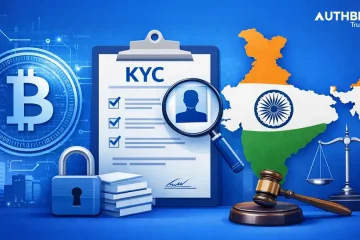
            Crypto Regulations in India: New KYC Rules Explained

            Introduction

            Crypto regulation in India has tightened, introducing stricter rules that are transforming how people use crypto platforms. The Financial Intelligence Unit (FIU) now mandates crypto platforms to follow stronger KYC and AML guidelines. For example, users must complete live identity verification and provide more details than before. This aims to improve transparency and reduce the misuse of digital assets, affecting how both users and crypto businesses operate in India every day.

            What Has Changed in Crypto Regulation in India?

            Under the new crypto rules in India 2026, crypto KYC requirements have become more detailed. These changes aim to improve crypto compliance and introduce stricter verification checks at different levels:

            a. Identity Verification

            Users must provide a PAN card along with an additional ID, such as Aadhaar, a passport, or a voter ID. This step strengthens crypto identity verification in India and makes onboarding more reliable.

            Additionally, a live selfie verification process has been added, which monitors users’ eye and head movements to confirm that a real person is creating the account, helping prevent AI scams in the future. 

            b. Device and IP Tracking

            Platforms must also verify users in real time. They are required to collect the user’s location and other details, such as IP address, device ID, and transaction details, during signup. This helps them identify unusual activity.

            c. Wallet and Transaction Tracking

            Platforms also need to track wallet activity and transactions. For example, transaction hashes act as unique IDs that help identify and verify each transaction. 

            d. OTP Verification

            Platforms require OTP (one-time password) verification for both mobile numbers and email IDs.

            These updates make crypto KYC India more structured and secure. They also align with stricter crypto onboarding rules, focusing on reducing misuse and improving transparency.

            Bank Account Verification Rules

            Under the new crypto rules, bank account checks have become stricter. 

            Penny Drop Method

            Platforms now use the penny drop verification to confirm bank details. For example, a small amount of money is deposited into a bank account to check if it is active and linked to the same person. 

            Why Is It Important?

            This step helps prevent fraud by confirming that the bank account is genuine and linked to the correct individual. It also supports crypto AML rules and improves overall crypto verification.

            These checks make crypto KYC in India stronger and help platforms meet requirements while building greater trust and security.

            Enhanced Due Diligence (EDD): Who Gets Flagged?

            a. High-Risk Users

            Some accounts may appear riskier based on their profile details or activity. In such cases, platforms may take a closer look to ensure everything is in order.

            b. Tax Haven Connections

            Transactions that are linked to certain countries or regions may raise concerns. These cases require more careful review due to their inherent risk. 

            c. Suspicious Transactions

            Accounts with unusual patterns, such as very large transfers or frequent activity within a short time, may be flagged. This helps identify anything that does not appear normal.

            However, these extra checks do not apply to everyone. Platforms will use them only when something seems unusual. This approach keeps the process balanced while still improving safety and trust.

            Why the Government Introduced These Rules

            a. Prevent Money Laundering

            Crypto transactions can easily and quickly move across borders. Because of this, stricter checks help track the source of funds and reduce illegal activities. 

            b. Stop Terrorist Financing

            Stronger verification checks make it difficult for users to misuse crypto platforms for unlawful activities. 

            c. Improve Trust

            Clear and simple rules make people feel confident while using crypto platforms. As a result, both users and businesses can operate with more trust.

            What This Means for Crypto Platforms

            The new crypto rules bring clear changes for crypto platforms. They now need to handle more responsibility at every step. 

            a. More Compliance Work

            Platforms now need to follow stricter checks and maintain detailed records. Because of this, the overall compliance effort increases.

            b. Need for Better Verification Systems

            Basic checks are no longer enough. Platforms need stronger and faster systems to verify identity, documents, and bank details smoothly. 

            c. Real-Time Monitoring

            Platforms must keep an eye on user activity and transactions as they happen. This helps detect unusual activity early.

            What This Means for Users

            a. Increased Verification Steps

            With the new crypto mandate, users need to complete additional checks during signup and while making transactions.

            b. Safer Ecosystem

            Stronger rules help reduce fraud and misuse. As a result, the overall environment becomes more secure.

            c. Less Anonymity

            Users now need to share more details, which reduces anonymous activity on platforms.

            Conclusion

            Crypto regulation in India is evolving quickly, and both platforms and users need to keep up. Stronger compliance is now essential to stay safe and legal. These new rules help build trust and create a more secure and reliable crypto ecosystem for everyone.

            Frequently Asked Questions (FAQs)

            The government has introduced stricter rules for crypto platforms to improve security and transparency. Users must complete identity verification, bank account checks, and live KYC steps under the new guidelines.

            Yes, cryptocurrency is legal in India, but it is regulated. Platforms and users must follow the latest KYC, AML, and compliance rules to operate safely and legally.

            A PAN Card is used to verify the identity of users and ensure that transactions are linked to the correct individuals. It also helps platforms comply with anti-money laundering rules.

            The Financial Intelligence Unit (FIU) sets guidelines for crypto platforms to prevent illegal activities like money laundering and terrorist financing. FIU ensures platforms follow proper KYC, AML, and monitoring rules.

            KYC & AML in Crypto: Building Trust, Ensuring Compliance, and Preventing Fraud

            What is KYC in Crypto? A Complete Guide to AML, Compliance & Fraud Prevention

            Introduction

            Think about this for a moment. 

            One of your friends signs up on a new crypto platform. Everything works smoothly at first. 

            Then, one day, their account gets frozen for “suspicious activity.” They’re asked to verify their identity, but there’s no clarity on what’s needed or how long it will take. 

            Days turn into weeks, and now their money is stuck. 

            The real issue? The platform didn’t have any robust verification systems in place. 

            This isn’t a rare situation. But a very common example of what many users and businesses are experiencing. 

            The Growing Need for Trust in Crypto

            Over the past few years, cryptocurrency has exploded in popularity, with the crypto market growing rapidly across the globe. More people than ever before are investing, trading, and building businesses around digital assets. 

            However, the same features that make crypto attractive: speed, global access, and limited identity requirements, also make it easier for fraudsters to misuse the system. Fake identities, money laundering, and suspicious transactions are becoming more common than ever. 

            As a result, regulators worldwide are tightening rules to make crypto safer and more transparent.

            For crypto platforms and fintech businesses, this creates a difficult balance. They need to offer fast and seamless user experiences, but at the same time, they must ensure strong security and compliance. 

            This is where trust becomes important. 

            Today, users are more aware and cautious. They want to know that the platform they are using is secure, compliant, and reliable. For businesses, building that trust is now essential. 

            And this is where Know Your Customer (KYC) and Anti-Money Laundering (AML) frameworks play a crucial role, helping businesses not only stay compliant but also create a safer and more trustworthy environment for their users.  

            But what do these terms exactly mean, and why are they so important in the world of crypto? 

            Let’s break down the basics.

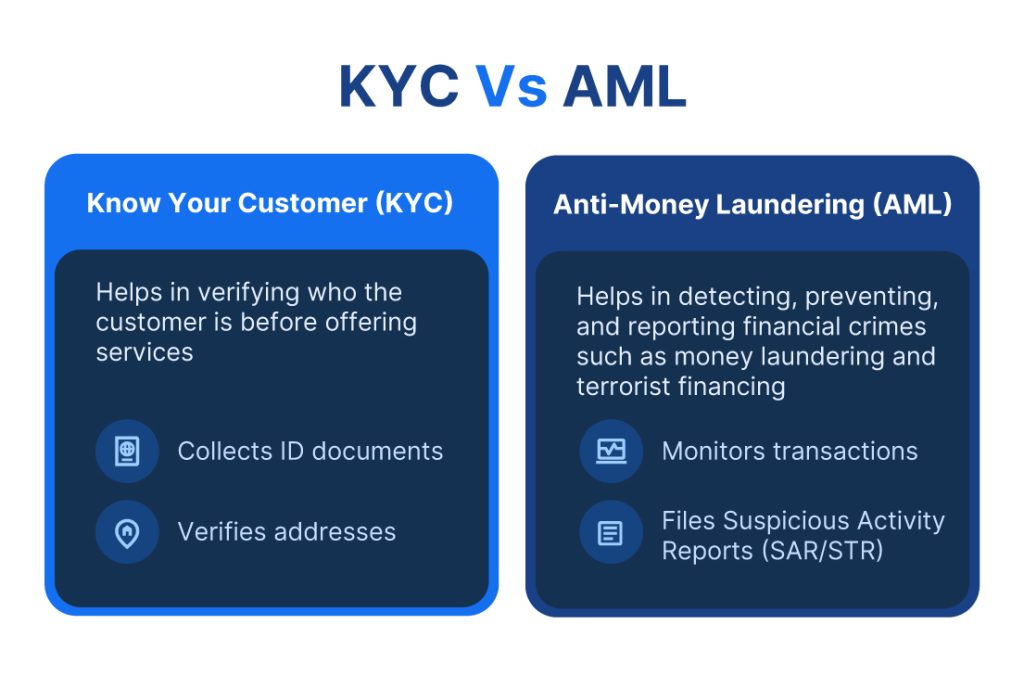
            Understanding the Basics: What are KYC and AML?

            Difference between AML and KYC

            What is Know Your Customer (KYC)?

            KYC, or Know Your Customer, is the process businesses use to confirm that their customers are genuinely who they claim to be. 

            In simple terms, it’s like a basic identity check before someone is allowed to use a platform. 

            This is often done to assess customer risk and ensure that they comply with Anti-Money Laundering (AML) laws, so that only legitimate users access the platform. It involves knowing a customer’s identity, financial activities and risk. 

            To do this, companies collect and verify basic details such as full name, date of birth, address, and any other government-issued ID (like PAN, Aadhaar, passport, etc.). 

            What is Anti-Money Laundering (AML)?

            AML, or Anti-Money Laundering, refers to a set of laws, rules, and processes designed to prevent illegal money from entering or moving through the financial system. 

            While KYC processes confirm who the user is, AML focuses on what the user is doing. 

            It includes activities such as monitoring transactions for suspicious behaviour, flagging unusual patterns, checking users against watchlists or sanction lists, and reporting suspicious activities to authorities. 

            What is KYC in Crypto?

            KYC in crypto works very similarly to KYC in banks, but with a stronger focus on digital verification. 

            In simple terms, what does KYC mean in crypto? It is when someone signs up on a crypto platform, they are usually asked to upload an ID proof, share personal details, and complete a quick verification (like a selfie or face scan). This helps the platform verify the user’s identity, understand their risk level, and prevent fake or duplicate accounts. 

            In simple terms, KYC in crypto means making sure that only real and verified users can access and use the platform.

            What is AML in Crypto?

            AML in crypto ensures that platforms such as cryptocurrency exchanges, wallet providers, and other virtual asset service providers (VASPs) monitor and control financial activity on their platforms. It often tracks things like unusual transaction patterns, large or sudden fund movements, or transactions linked to suspicious wallets. 

            How Do KYC and AML Work Together?

            Both KYC and AML work together to prevent financial fraud and ensure regulatory adherence. 

            Together, they answer two simple but important questions: 

            • Who are you? 
            • What are you doing on the platform? 

            If either of these two things is missing, problems can arise. 

            Now that we understand what KYC is, let’s take a look at how it actually works in the crypto world. 

            How Crypto Onboarding Works

            Crypto onboarding can sometimes feel a bit confusing, especially for new users. It often asks for a lot of personal information and introduces prompts to help users make decisions about crypto concepts that they might not be familiar with. 

            Whenever a user signs up on a crypto platform, the onboarding process is quite simple. If you’re wondering how to do KYC in crypto, here are a few simple steps to follow during onboarding: 

            a. Account Creation

            Requires users to create their account by entering their email ID, password, and basic details like name or country. It’s often quick and similar to signing up on any other app. 

            b. Identity Verification

            This is where KYC comes in. Users are asked to upload an ID proof, take a selfie or live photo, and complete their OTP or email verification. This step ensures the user is genuine and not using a fake identity.

            c. Custody of Wallets and Keys

            Once verified, users get access to a crypto wallet. 

            There are two common options: 

            • Custodial Wallets: Managed by the platform (easier for beginners)
            • Self-custodial Wallets: Controlled by the user 

            d. First Transaction and Education

            After the setup, users are guided to make their first transaction. Many platforms make this easy by providing simple instructions, tooltips, short explanations, and step-by-step guidance. This helps the user understand how things work and builds their confidence.

            Key User Data Collected

            To ensure a smooth KYC process, crypto platforms typically collect data such as:

            • Full name
            • Date of birth
            • Residential address
            • Government-issued ID number
            • and sometimes even a selfie or biometric data

            This data helps platforms confirm the user’s identity, prevent duplicate or fake accounts, and build a basic risk profile.

            Why is Identity Verification Essential for Crypto Companies?

            a. Helps prevent financial crime and fraud

            Without proper identity verification, anyone can create fake accounts and misuse the platform. 

            b. Builds Trust with Users and Customers

            When users know that a platform is protected with identity verification and AML procedures, they are more likely to feel comfortable depositing funds, knowing their financial information is safe. 

            c. Ensures Regulatory Compliance

            Crypto platforms are required to follow stricter regulations. Without proper KYC, they risk heavy penalties, restrictions, or even shutdowns. 

            Why Crypto Platforms Face High-Compliance Risks

            Crypto platforms operate in a fast-growing and evolving space, but with that growth comes higher risks and greater responsibility. 

            a. Decentralised Nature and Lack of Clear Regulations

            Unlike banks, crypto does not have a single central authority controlling everything.

            This means:

            • There is no one body monitoring all transactions
            • It can be difficult to identify who is involved in a transaction

            At the same time, governments and regulators are still trying to catch up with how fast crypto is evolving.

            Because of this, rules are still developing, and guidelines are sometimes unclear or different across countries. 

            This lack of clarity and control makes it easier for criminals to misuse crypto for activities like money laundering and illegal fund transfers. 

            b. Higher Level of Anonymity

            Crypto transactions are often linked to wallet addresses instead of real names, which creates a major challenge.

            For example, you might see funds moving from one wallet to another, but you may not know who actually owns those wallets.

            This makes it harder to track where money is coming from, understand where it is going, and identify suspicious users. 

            Also, traditional KYC methods used in banks don’t always fit perfectly in crypto, which creates gaps in verification. 

            What Businesses Need to Know

            As crypto continues to grow, governments and regulators across the world are paying closer attention. The focus is clear: make crypto safer, more transparent, and less open to misuse.

            a. Global Compliance Expectations

            Around the world, crypto platforms are now expected to follow stricter rules. This includes verifying user identities properly, monitoring transactions continuously, and reporting any suspicious activity. 

            b. India-Specific Considerations

            In India, crypto businesses are also coming under closer regulatory focus.

            Platforms are generally expected to follow KYC requirements, maintain transaction records, and ensure transparency in operations. While the rules are still evolving, one thing is clear: strong compliance is becoming necessary for operating in the long run. 

            c. Penalties for Non-Compliance

            Failing to follow KYC and AML rules can have serious consequences.

            These may include heavy financial penalties, restrictions on operations, loss of business reputation, and, in extreme cases, shutdown of services. This is why compliance is no longer optional; it’s critical for survival.

            How Advanced Technology is Making KYC Smarter and More Reliable

            As crypto continues to grow, platforms need faster, smarter, and more reliable ways to verify users and manage risk. This is where modern technologies like AI are making a big difference.

            a. Smarter ID Verification with AI

            Today, AI can verify identities much faster and more accurately than manual processes.

            It can check if an ID is real or fake, match a user’s face with their document, and cross-check details with multiple databases. This helps platforms quickly confirm if a user is genuine, building trust right from the start.

            b. Deeper Background Checks

            Verification is no longer limited to just checking an ID.

            Advanced systems can now examine a person’s digital presence, professional history, and public records. This gives platforms a more complete picture of who they are onboarding, helping them make better decisions and reduce risk.

            c. Detecting Suspicious Behaviour Early

            Technology can also track how users behave on a platform.

            It can identify unusual patterns, sudden changes in activity, and actions that may indicate fraud. This allows platforms to catch potential risks early, before they turn into bigger problems.

            d. Handling Large Volumes with Ease

            As crypto platforms grow, they need to verify thousands, even millions, of users. And manual checks simply can’t keep up.

            With automation, platforms can process large volumes quickly, maintain accuracy, and avoid delays in onboarding. This ensures a smooth experience for users while keeping systems secure.

            e. Keeping Up with Changing Regulations

            Crypto regulations are constantly evolving, and businesses need to keep up.

            Technology helps by adapting quickly to new rules, updating verification processes automatically, and ensuring ongoing compliance. This makes it easier for platforms to stay aligned with global standards without constant manual effort.

            How AuthBridge Helps Crypto Businesses Stay Compliant

            For crypto platforms, managing KYC and AML is not just about following rules; it’s about building a system that is fast, secure, and scalable.

            This is where solutions from companies like AuthBridge play an important role.

            With a combination of AI, data, and automation, AuthBridge helps businesses verify users, detect risks, and stay compliant, without slowing down user onboarding.

            a. End-to-End Verification Solutions

            AuthBridge offers a complete verification ecosystem, from user onboarding to ongoing monitoring.

            This includes identity verification, background checks, risk assessment, and continuous monitoring. Instead of using multiple tools, businesses get a single, integrated solution that covers the entire compliance journey.

            b. Digital KYC & Identity Verification

            AuthBridge enables fully digital KYC, making the onboarding process quick and seamless.

            It uses technologies like AI-powered facial recognition, liveness detection, OCR (to extract data from documents), and geo-tagging for address verification. This allows platforms to verify users in real-time, reducing onboarding time from days to just minutes.

            c. AML Screening & Monitoring

            To help businesses stay compliant, AuthBridge provides advanced AML solutions that screen users against global watchlists (like sanctions, PEPs, etc.), monitor transactions for suspicious activity, and provide real-time alerts when risk levels change. 

            With access to large databases and continuous monitoring, platforms can detect and prevent financial crimes early.

            d. Fast, Secure Onboarding

            One of the biggest advantages is speed without compromising security.

            Crypto KYC plays a key role in ensuring secure onboarding and compliance. With automation and AI, verification happens in real-time, manual effort is reduced, and fraud detection improves. At the same time, the platform follows strong data security standards and regulatory guidelines, ensuring that user data is protected and compliance is maintained. 

            Why KYC is Essential for the Future of Crypto

            For crypto to grow and become widely accepted, trust and security are essential. And this is where KYC plays a very important role.

            KYC helps make crypto platforms safer by reducing the risk of fraud, preventing misuse by fake or suspicious users, and supporting Anti-Money Laundering (AML) efforts. When platforms properly verify their users, it creates a more secure environment for both individuals and businesses.

            In simple terms, strong KYC systems help ensure that digital transactions are safe and reliable.

            Conclusion

            Crypto has opened up exciting opportunities, but it has also brought new risks that businesses can’t afford to ignore.

            As we’ve seen, challenges like anonymity, rising fraud, and evolving regulations make compliance more important than ever. It’s no longer just about following rules; it’s about protecting users, safeguarding transactions, and building a platform people can trust.

            This is where strong KYC and AML frameworks come in.

            When done right, they don’t just prevent fraud; they create a safer environment for users, improve onboarding experiences, help businesses scale with confidence, and build long-term credibility in the market. 

            For crypto platforms, the goal should be clear: make security and compliance a core part of the user experience, not an afterthought.

            By adopting the right technology and partnering with trusted verification providers like AuthBridge, businesses can strike the perfect balance between speed, security, and compliance.

            In a space where trust is everything, the platforms that invest in strong verification systems today will be the ones that lead tomorrow.

            Periodic Updation of KYC_blog image

            Periodic Updation of KYC: RBI Guidelines, Process, and Compliance Benefits

            Introduction

            Financial institutions operate in a highly regulated environment where maintaining accurate customer records is essential for both compliance and fraud prevention. Know Your Customer (KYC) procedures help organizations verify customer identities during onboarding, but customer information can change over time. This is why regulators require institutions to periodically update customer records.

            The Reserve Bank of India (RBI), through its Master Direction on KYC, mandates the periodic updation of KYC to ensure that financial institutions maintain accurate and current customer information throughout the lifecycle of the relationship.

            Periodic KYC updates help organizations strengthen anti-money laundering controls, reduce fraud risks, and ensure regulatory compliance. This article explains the concept of KYC reverification, the RBI guidelines governing it, the process involved, and why it is important for financial institutions.

            What is KYC Reverification?

            KYC reverification refers to the process of reviewing and updating customer identity and due diligence information after the initial onboarding stage.

            While KYC verification during onboarding confirms a customer’s identity, periodic updates ensure that the information remains accurate throughout the customer relationship.

            Customer information can change due to several reasons, such as:

            • evolving risk profiles of customers
            • change in ownership structures in business accounts
            • updates in identification documents
            • change in occupation or income
            • change in residential address

            If financial institutions rely on outdated records, they may face increased risks of fraud, money laundering, or regulatory non-compliance. KYC reverification ensures that institutions maintain accurate and updated customer records while continuously monitoring risk.

            RBI Master Direction on Periodic Updation of KYC

            The Reserve Bank of India’s Master Direction on Know Your Customer (KYC) provides detailed guidelines for regulated entities including banks, NBFCs, and payment institutions regarding customer due diligence and KYC updates.

            According to the RBI framework, regulated entities must periodically update customer information to ensure that the records collected during onboarding remain accurate and complete.

            The key objectives of periodic KYC updation include:

            • maintaining updated identity records
            • reassessing the risk category of customers
            • ensuring continued compliance with AML regulations
            • strengthening transaction monitoring frameworks

            These regulatory guidelines align with global anti-money laundering standards recommended by international bodies such as the Financial Action Task Force (FATF). By periodically updating customer information, institutions can better detect suspicious financial activities and reduce systemic risks.

            The KYC Reverification Process

            Periodic KYC updates usually follow a structured workflow designed to validate customer identity and reassess risk profiles.

            Customer Notification

            The process typically begins with notifying customers that their KYC information requires updating. Institutions may send notifications through email, SMS, mobile applications, or online banking portals.

            Clear communication ensures that customers understand why the update is required and how they can complete the process.

            Identity Confirmation

            Customers may be asked to confirm or resubmit identity documents such as:

            Address Verification

            Institutions verify whether the customer’s registered address is still valid. Address verification may involve document validation, digital verification methods, or customer confirmation through secure channels.

            Risk Profile Reassessment

            During reverification, institutions reassess the customer’s risk classification based on updated information, financial activity, and regulatory requirements.

            AML and Sanctions Screening

            Customer information is screened against sanctions lists, politically exposed persons databases, and adverse media sources. This step ensures that the customer does not pose elevated regulatory or financial crime risks.

            Why Periodic KYC Reverification is Important?

            The good news? You probably don’t need to visit a bank branch. The 2025-26 guidelines have made the process significantly easier:

            a. No Change? Use Self-Declaration

            If your address and identity details haven’t changed, you can simply submit a self-declaration. This can be done via:

            • Internet Banking or Mobile Apps.

            • Registered Email or SMS.

            • ATMs.

            b.Use a Business Correspondent (BC)

            In a major update for 2026, the RBI now allows Authorized Business Correspondents (local agents or kiosks) to assist with KYC updation using biometric-based e-KYC. This is especially helpful for those in rural or semi-urban areas.

            c.Video-KYC (V-CIP)

            For those who need to submit new documents, Video-based Customer Identification Process (V-CIP) allows you to complete the process from your living room via a secure video call with a bank official.

            Challenges in Manual KYC Reverification

            Despite its importance, periodic KYC updates can present operational challenges when handled manually.

            Financial institutions may face issues such as:

            • high operational workload
            • document collection delays
            • customer drop-offs during verification
            • manual data entry errors
            • difficulty scaling verification processes

            For organizations managing millions of customer accounts, manual reverification processes can become inefficient and resource-intensive.

            These challenges are prompting institutions to adopt automated and technology-driven verification frameworks.

            Best Practices for Financial Institutions Implementing KYC Reverification

            Financial institutions can strengthen their KYC frameworks by adopting several best practices.

            Organizations should implement risk-based monitoring frameworks that prioritize high-risk customers for frequent updates.

            Automation can help streamline document verification and reduce operational burden while maintaining accuracy.

            Institutions should also maintain centralized customer information systems to manage KYC records across different products and services.

            Integrating KYC updates with transaction monitoring systems can further enhance the ability to detect suspicious financial activity.

            Finally, providing user-friendly digital update mechanisms ensures that customers can complete KYC updates without unnecessary friction.

            Conclusion

            Periodic updation of KYC is an essential regulatory requirement that helps financial institutions maintain accurate customer records and strengthen compliance frameworks.

            By regularly updating customer information and reassessing risk profiles, institutions can reduce fraud risks, improve AML monitoring, and ensure adherence to regulatory guidelines.

            As financial systems become increasingly digital, leveraging technology to automate KYC reverification will be key to maintaining efficient, secure, and compliant financial operations.

            Gig Worker Verification in India: Why It Matters and How Businesses Can Do It Right

            Gig Worker Verification in India: Why It Matters and How Businesses Can Do It Right

            Introduction

            Need groceries? They arrive in 10 minutes. 

            Craving some good food for dinner? It’s at your doorstep in just 30 minutes. 

            Need something from the pharmacy? A delivery partner will bring it to you. 

            Most of us don’t even think twice about this. After all, these services have become a normal part of our everyday lives. 

            But as the number of gig workers continues to grow, one important question is becoming harder to ignore:

            Are the people delivering these services properly verified?

            Over the last 2-3 years, India has seen a massive rise in gig and platform-based work. Gig workers are now part of what’s called the “last mile.” They are the final point of contact between a business and the customer.

            And with quick-commerce platforms offering 10-minute delivery services, individuals taking up these flexible assignments have become an essential part of how businesses operate today. 

            However, this rapid growth also brings new challenges. And this is why it becomes even more important for us to verify these individuals, so we can create a safe and reliable ecosystem for businesses, workers, and customers alike. 

            Why is Gig Worker Verification Urgent Right Now

            a. Keeps Customers Safe

            One of the primary reasons for conducting background verification in the gig economy is customer safety. 

            Many gig workers interact with customers in situations where there is little or no supervision. If workers are not verified properly, there is a risk that someone with a problematic background could be hired.

            Background checks help businesses identify such risks by checking things like criminal records, identity details, and other important information.

            b. Builds Trust in the Platform

            Trust is extremely important for any digital platform, and customers use services only when they feel confident that the company is reliable and safe. So, if a worker with a criminal background is allowed on a platform and any incident occurs, it can quickly damage the company’s reputation. 

            Background verification helps prevent this by making sure that only verified and trustworthy workers are allowed to join the platform.

            c. Prevents Fraud and Fake Information

            Gig workers are often hired quickly without any physical supervision, in most cases. Because of this, there is always a chance that someone might provide false or incomplete information while signing up. 

            For example, a worker might provide fake identity documents, incorrect work history, fake educational qualifications, or even use someone else’s account or details. 

            This is where background verification helps companies check whether the information provided is genuine. By undergoing a detailed background verification in the gig economy, businesses can reduce the chances of fraud and misrepresentation on their platforms.

            Policy Discussion Around Mandatory Police Verification

            To meet the ever-increasing demand, organisations often need to onboard thousands of gig workers quickly. However, such quick hiring can lead to real risks, such as fake or borrowed identities being used, people using someone else’s account to make deliveries, theft, or even workers with undisclosed criminal records. 

            And this is where the government needs to step in. 

            Recently, in Maharashtra, there have been discussions about making police verification mandatory for gig workers, especially delivery partners. 

            This shows that verification is no longer just a company decision, but is slowly becoming a regulatory requirement. 

            So, What Does This Mean For Businesses?

            It is quite simple. Speed is no longer enough. 

            Businesses must now focus on verifying every worker properly, ensuring compliance with regulations, and building trust with customers.

            Who Needs to Verify, and Who is a "Gig Worker" Under Indian Law?

            If you’ve ever booked a cab, ordered food, or called someone home for a repair, you’ve already interacted with a gig worker. 

            But here’s the important question for businesses:

            Who exactly are gig workers, and who is responsible for verifying them? 

            Gig Worker Meaning

            According to the Code on Social Security 2020, a gig worker is someone who works on short-term or flexible jobs, is not a full-time employee of one company, and gets paid per task. 

            In really simple words, anyone who works “on demand” is considered a gig worker. 

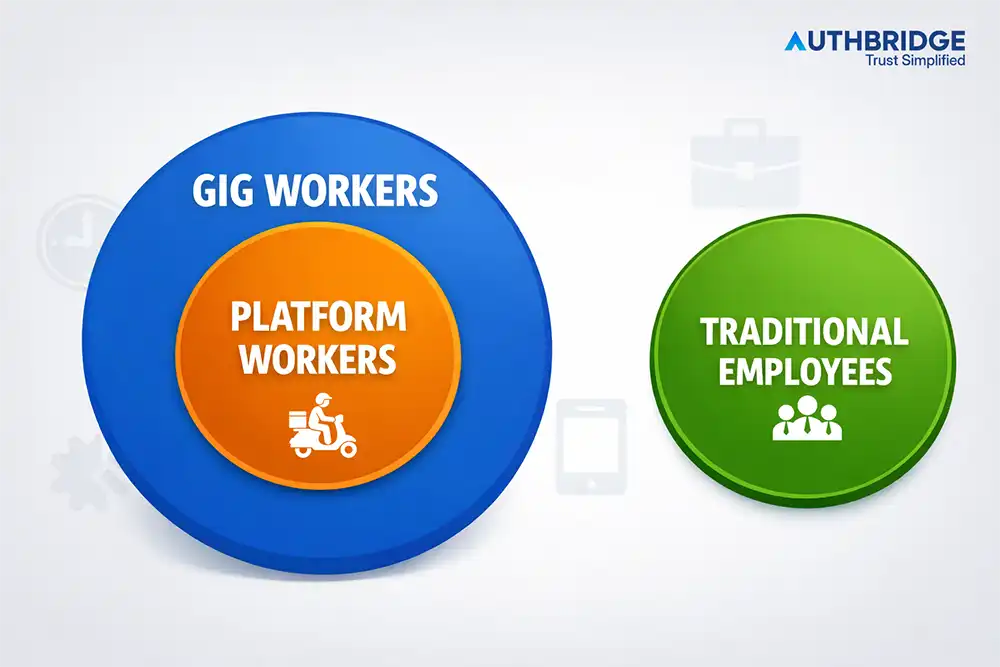
            Gig Workers Vs Platform Workers Vs Traditional Employees

            Gig Workers Vs Platform Workers Vs Traditional Employees

            Gig Workers 

            Any individual doing short-term, flexible work, either offline or online 

            Platform Workers

            A type of gig worker who works specifically through digital platforms

            Traditional employees

            Individuals who work full-time or part-time for a company with a fixed salary, defined working hours, and employee benefits

            Who Needs To Verify Gig Workers?

            Gig workers are everywhere today. Some of the biggest industries using them include food delivery platforms, quick commerce, logistics & last-mile delivery, mobility services, and home services. 

            So, any or every business using gig workers, directly or indirectly, needs to verify them. 

            It’s important to note that a common mistake most companies make is assuming that since workers are hired through a vendor, the responsibility of verification lies with the vendor. But in reality, the responsibility ultimately lies with the business itself.

            Now that we understand who gig workers are, let’s talk about something even more important: how do businesses make sure they are hiring the right people?

            That’s where gig worker verification comes in.

            What is Gig Worker Verification?

            Gig Worker Verification simply means checking and confirming a worker’s identity, background, and details before they start working. 

            In simple words, it answers basic questions like:

            • Is this person really who they claim to be?
            • Are their documents genuine? 
            • Do they have any records that could be a risk? 

            This process usually includes checking ID proof, address, documents, and sometimes even police or criminal records.

            Types of Verification Checks Companies Should Run

            So, what does proper gig worker verification actually look like?

            The answer is really simple: it’s never just a single check.

            A thorough gig worker verification is a combination of multiple checks that help businesses ensure they are onboarding the right individuals. 

            a. Identity Verification

            This is the first and most important step. It involves verifying documents like Aadhar, PAN, and other government-issued IDs. The goal is simple: to ensure the person is who they claim to be.

            b. Criminal Record/Police Verification

            This step checks whether the person has any criminal history or police records. The goal is simple: to reduce the risk of onboarding individuals with a problematic history. 

            This step checks whether the person has any criminal history or police records. In many cases, this may also involve obtaining a police clearance certificate, which serves as official proof that the individual does not have a criminal background.

            c. Address Verification

            This step confirms whether the worker actually lives at the address they have provided. This ensures that if something goes wrong, businesses can track and contact the worker when needed. 

            d. Document Verification

            This involves checking whether the documents submitted are genuine and not tampered with. This is done to catch any edited or fake documents at an early stage. 

            e. Driving License and Vehicle Checks

            This step verifies the driving license and checks the vehicle’s registration details. It ensures that the person is legally allowed to drive and that the vehicle being used is properly registered.

            f. Continuous Monitoring and Re-Verification

            Verification should not be a one-time process. Over time, businesses should re-check worker details and monitor for any changes or new records.

            Challenges Companies Face in Gig Worker Verification

            a. High Volume Onboarding

            Gig workers often need to onboard hundreds or even thousands of workers in a short time, especially during peak seasons, sales, or festivals. So, when speed becomes the priority, verification can get rushed or overlooked. 

            b. Third-Party Contractor Hiring

            Most companies don’t hire gig workers directly. Instead, they rely on third-party vendors or agencies, which often creates an accountability gap. 

            c. Fake or Manipulated Documents

            With digital onboarding, document submission is often done online. While this makes things faster, it also opens the door for misuse, where people may upload edited, fake, or borrowed documents.

            How AuthBridge Enables Safe and Scalable Gig Worker Verification

            As gig businesses scale rapidly, the need for fast, reliable, and secure worker verification becomes critical. AuthBridge enables organisations to simplify this process through a digital-first, scalable verification ecosystem.

            From identity and address authentication to police verification and background checks, AuthBridge helps businesses onboard gig workers quickly while maintaining high standards of safety and compliance.

            a. Digital Background Verification

            Instead of relying on slow and manual processes, AuthBridge offers fully digital background verification.

            This enables:

            • Faster verification of worker details
            • Reduced chances of human error
            • The ability to verify large volumes of workers at scale

            By automating the verification process, businesses can onboard workers quickly without skipping critical checks. This is especially useful for companies that need to scale rapidly while maintaining accuracy and compliance.

            b. Police Verification Solution

            With the growing focus on safety and compliance, police verification is becoming increasingly important for businesses working with gig workers.

            AuthBridge enables organisations to:

            • Conduct police verification checks digitally
            • Stay aligned with evolving regulatory requirements
            • Reduce risks associated with worker background

            This helps businesses stay prepared, compliant, and proactive, especially as regulations around gig worker verification continue to evolve.

            c. Identity and Address Authentication

            AuthBridge helps verify:

            • Identity documents such as Aadhaar and PAN
            • Address details provided by workers

            This ensures that:

            • The worker is genuine
            • The information provided is accurate
            • The worker can be traced if required

            As a result, businesses can significantly reduce the risk of fake identities, incorrect information, and untraceable workers, which are common challenges in large-scale onboarding.

            d. Real-Time Onboarding Infrastructure

            One of the biggest advantages of digital verification is the ability to enable real-time onboarding.

            This includes:

            • Instant verification checks during onboarding
            • Faster approval and activation of workers
            • Seamless integration with existing business platforms

            With this infrastructure in place, businesses no longer have to choose between speed and safety; they can achieve both at the same time.

            Together, these solutions help businesses build a faster, safer, and more reliable onboarding process, ensuring that every gig worker is properly verified before they interact with customers.

            Conclusion

            As the gig economy continues to grow, one thing is becoming very clear: verification can no longer be ignored.

            Today, businesses are not just delivering products or services. They are sending people to customers’ doorsteps. And with that comes a responsibility to ensure those people are trusted, verified, and safe.

            For gig platforms, this means taking a more proactive approach. Background verification should not be treated as an optional step or a one-time task. It needs to be a core part of the onboarding process, right from the beginning.

            When done properly, verification helps businesses:

            • Keep customers safe
            • Protect their brand reputation
            • Stay compliant with evolving regulations
            • Build a workforce they can rely on

            At the same time, it also builds confidence among customers. When people know that the person arriving at their door has been properly verified, they feel more comfortable using the service again.

            This is where the right technology and partners can make a big difference. With solutions from AuthBridge, businesses can simplify and speed up the verification process, reduce risks, and focus on growing their operations, without compromising on safety.

            Because in the end, the success of the gig economy doesn’t just depend on how fast services are delivered.

            It depends on how much people trust the system behind it.

            What Is Background Verification? Process, Types, and Importance for Businesses

            Introduction

            Hiring the right people is one of the most important decisions any organisation makes. A strong team drives productivity, innovation, and long-term business success. 

            As companies grow and hiring becomes faster and more frequent, the chances of encountering inaccurate information, exaggerated experience, or unverified credentials can increase. Even a single hiring mistake can impact workplace productivity, team trust, and an organisation’s reputation.

            To reduce these risks, many businesses are strengthening their hiring processes by verifying the information candidates provide during recruitment. By validating key details such as identity, education, and employment history, organisations can ensure they are making well-informed hiring decisions and bringing trustworthy individuals into their workforce.

            These verification practices have become an essential part of modern recruitment strategies, helping companies maintain transparency, build safer workplaces, and protect their long-term credibility. This is where background verification plays a critical role in ensuring that every hiring decision is based on accurate and verified information.

            In this blog, we’ll take a closer look at what background verification is, how it works, and why it has become a crucial step in today’s hiring process.

            What is Background Verification?

            Background verification is the process of confirming the accuracy of the information shared by a candidate during the hiring process. This involves checking a person’s identity, education, employment history, criminal records, and other relevant details to ensure that the information shared is genuine and trustworthy.

            In simple words, this helps validate who a candidate is and whether their credentials are authentic before making a final hiring decision.

            Importance of Background Screening

            a. Helps Reduce Hiring Risks

            Nearly 85% of employers have discovered discrepancies in candidate resumes, especially when it comes to education and past work experience. Sometimes, the information presented is exaggerated or inaccurate. That’s when background verification helps organisations confirm these details, ensuring that candidates truly have the qualifications and experience they claim.

            b. Creates a Safer Workplace

            A safe work environment is important for employee well-being and organisational stability. Conducting background checks, such as criminal record verification, helps companies identify potential risks before hiring. This allows employers to make informed decisions and maintain a secure and respectful workplace for all employees.

            c. Protects the Company’s Reputation

            If an employee with false credentials or unethical behaviour joins the organisation, it may damage trust with clients, partners, and other employees. That’s when thorough background verification helps companies avoid such situations and maintain their credibility.

            d. Makes Hiring Faster and More Reliable

            With advancements in technology such as automation and AI, background verification has become much faster and more efficient. These modern verification systems allow organisations to verify candidate details quickly and accurately, helping HR teams complete hiring processes without unnecessary delays.

            e. Builds a More Trustworthy Workforce

            When organisations take the time to verify candidate information, they build a culture of transparency and accountability. Employees feel more confident working in an environment where hiring decisions are based on verified information and fair processes.

            By implementing robust background verification processes, companies can ensure they hire the most suitable candidates, protect their operations, and maintain a safe and productive work environment. This proactive approach helps minimise risks, enhance hiring accuracy, and build a trustworthy workforce.

            Types of Background Screening Checks

            Background verification is not just a single check. It usually involves multiple checks that help employers confirm different aspects of a candidate’s profile. Each type of verification focuses on a specific area to ensure that the information provided by the candidate is accurate and trustworthy.

            Provided below are some of the most common types of background verification checks used during the hiring process:

            a. Identity Verification

            Identity verification is usually the first step in the background verification process. It confirms that the candidate is genuinely who they claim to be.

            This check typically involves verifying official identification documents such as Aadhaar, PAN card, passport, or other government-issued IDs. It also helps employers confirm basic personal details and sometimes identify whether the individual’s name appears in any public legal or litigation records.

            By verifying a candidate’s identity, employers can prevent identity fraud and ensure transparency in the hiring process.

            b. Criminal Record Check

            A criminal background check helps organisations determine whether a candidate has any past criminal records, pending cases, or legal issues.

            This type of verification is important for maintaining workplace safety and protecting company assets. For example, if a company is hiring a delivery agent, driver, or customer-facing employee, it is essential to ensure the individual does not have a criminal history that could pose a risk to customers or colleagues.

            Conducting criminal checks allows employers to make responsible hiring decisions and maintain a safe working environment.

            c. Address Verification

            Address verification confirms the current and permanent residential address provided by the candidate.

            This check helps employers validate the authenticity of the candidate’s location and maintain accurate employee records. In some cases, verification may involve digital checks or physical visits to confirm that the address is genuine.

            Accurate address information is also useful for communication, documentation, and future record-keeping.

            d. Employment Verification

            Employment verification confirms the candidate’s previous work experience. Employers typically verify details such as:

            • Name of previous organisations
            • Job title or designation
            • Employment duration
            • Reasons for leaving

            This process helps companies ensure that the candidate truly has the experience they claim and prevents cases where individuals exaggerate or falsify their job history.

            e. Education Verification

            Education verification confirms whether the academic qualifications mentioned by the candidate are genuine.

            During this process, employers verify details such as:

            • Degree or certification obtained
            • Name of the educational institution
            • Year of graduation
            • Academic performance (if required)

            This check helps identify cases where candidates may have submitted fake degrees or inflated their academic credentials to secure a job.

            f. Credit Background Check

            A credit background check evaluates a candidate’s financial history and credit behaviour. It typically reviews factors such as outstanding debts, loan repayment history, and overall creditworthiness.

            This type of verification is especially important for roles involving financial responsibilities, banking, accounting, or access to company funds. It helps employers assess whether a candidate demonstrates responsible financial behaviour.

            g. Drug Testing

            Drug testing is conducted to determine whether a candidate has consumed illegal drugs or substances. This check is more common in industries where safety is critical, such as transportation, healthcare, manufacturing, or logistics.

            Drug screening helps organisations maintain a safe, healthy, and productive work environment while ensuring compliance with industry regulations.

            h. Reference Checks

            Reference checks involve speaking with former managers, colleagues, or professional references provided by the candidate.

            These conversations help employers gain insights into the candidate’s work ethic, behaviour, teamwork, and professional performance. Reference checks often provide valuable qualitative information that may not appear on a resume.

            By conducting these different types of background verification, organisations can gain a complete and reliable picture of a candidate’s profile. This allows employers to make informed hiring decisions, reduce risks, and build a trustworthy workforce.

            If your organisation is looking for reliable verification services, you can explore our guide on the Best Background Verification Company in Pune. 

            Which Industries Conduct Background Verification?

            Background verification is not limited to a specific industry. Today, organisations across sectors rely on background checks to ensure they hire trustworthy and qualified employees. Whether a company handles sensitive data, financial transactions, or direct customer interactions, verifying candidate credentials helps reduce risks and maintain a safe working environment.

            Here are some key industries where background verification plays an essential role: 

            a. Information Technology (IT) and ITES

            In the IT and IT-enabled services sector, employees often work with confidential client data, proprietary software, and intellectual property. Conducting background verification helps companies ensure that employees handling sensitive information have a reliable and trustworthy background.

            b. Healthcare

            Background verification is especially important in the healthcare industry, where employees are responsible for patient care and medical services.

            Hospitals and healthcare institutions verify the education, licenses, and professional history of doctors, nurses, and medical staff to ensure they are qualified and ethically responsible. These checks help protect patient safety and ensure compliance with healthcare regulations and professional standards.

            c. Education

            Educational institutions must create a safe and secure environment for students. Conducting background checks helps schools, colleges, and universities ensure that teachers and staff members do not have a history of misconduct or criminal activity.

            Thorough verification also helps institutions maintain their credibility and reputation by hiring professionals who are both qualified and trustworthy.

            d. Retail

            In the retail industry, employees often handle cash, inventory, and direct customer interactions. Background verification helps businesses reduce risks such as theft, fraud, or misuse of company resources.

            By verifying candidate records, retail organisations can hire employees who maintain professional conduct and build positive relationships with customers.

            e. Manufacturing

            Manufacturing environments require strict workplace safety and operational discipline. Verifying employee background helps companies identify potential risks and ensure that individuals working on production floors have the necessary qualifications and a responsible work history.

            Background checks also help maintain quality standards by confirming the credentials of employees responsible for production, supervision, and quality control.

            f. Telecommunications

            Telecommunications companies manage large volumes of customer data and communication networks. Background verification helps ensure that employees involved in technical operations, customer support, or data management are trustworthy.

            This is important for protecting sensitive information, preventing data breaches, and maintaining compliance with data privacy regulations.

            g. Banking and Financial Industry

            In the banking and financial sector, employees frequently handle financial transactions, confidential client information, and sensitive financial systems. Because of this, background verification is a critical step in the hiring process.

            These checks help organisations prevent fraud, ensure compliance with financial regulations such as KYC (Know Your Customer) requirements, and build trust with clients who rely on financial institutions to protect their assets.

            Across all these industries, background verification helps organisations reduce hiring risks, maintain compliance, and build a trustworthy workforce. As businesses continue to grow and operate in increasingly complex environments, thorough background checks have become a standard and essential part of responsible hiring practices.

            How the Background Verification Process Works

            Background verification may sound complex, but in reality, it follows a clear and structured process designed to confirm the authenticity of a candidate’s information.

            Although the exact process may vary slightly depending on the organisation or verification provider, most background checks follow these key steps:

            a. Candidate Consent and Information Collection

            The process begins when the candidate provides consent for the background verification. In many countries, including India, employers must obtain the candidate’s permission before conducting any checks.

            At this stage, candidates are asked to submit important details and documents such as:

            • Identity documents (Aadhaar, PAN, passport, etc.)
            • Educational certificates
            • Previous employment details
            • Address proof
            • Professional references

            This information forms the foundation for the verification process.

            b. Verification of Submitted Information

            Once the required details are collected, the verification team begins validating the information provided by the candidate. This may involve:

            • Contacting previous employers to confirm job roles and tenure
            • Verifying academic credentials with universities or institutions
            • Checking government records to confirm identity details

            The aim is to ensure that every key detail mentioned by the candidate is genuine.

            c. Database and Record Checks

            In addition to verifying documents, organisations may also conduct checks against public and official databases. These checks can include:

            • Criminal record searches
            • Global watchlist screenings
            • Financial or credit history checks (for certain roles)

            These screenings help identify any potential risks that could affect the organisation.

            d. Analysis and Verification Reporting

            After all checks are completed, the results are carefully analysed and compiled into a detailed verification report.

            The report typically highlights:

            • Verified information
            • Any discrepancies found
            • Areas requiring further clarification

            This allows HR teams and hiring managers to review the results and make informed hiring decisions.

            e. Final Hiring Decision

            Based on the background verification report, the employer evaluates whether the candidate meets the company’s standards and policies. If everything is verified successfully, the hiring process moves forward.

            However, if significant discrepancies are found, the employer may request clarification from the candidate or reconsider the hiring decision.

            Overall, the background verification process helps organisations hire with greater confidence and transparency. By validating candidate information before onboarding, companies can reduce hiring risks, maintain compliance, and build a workforce they can trust.

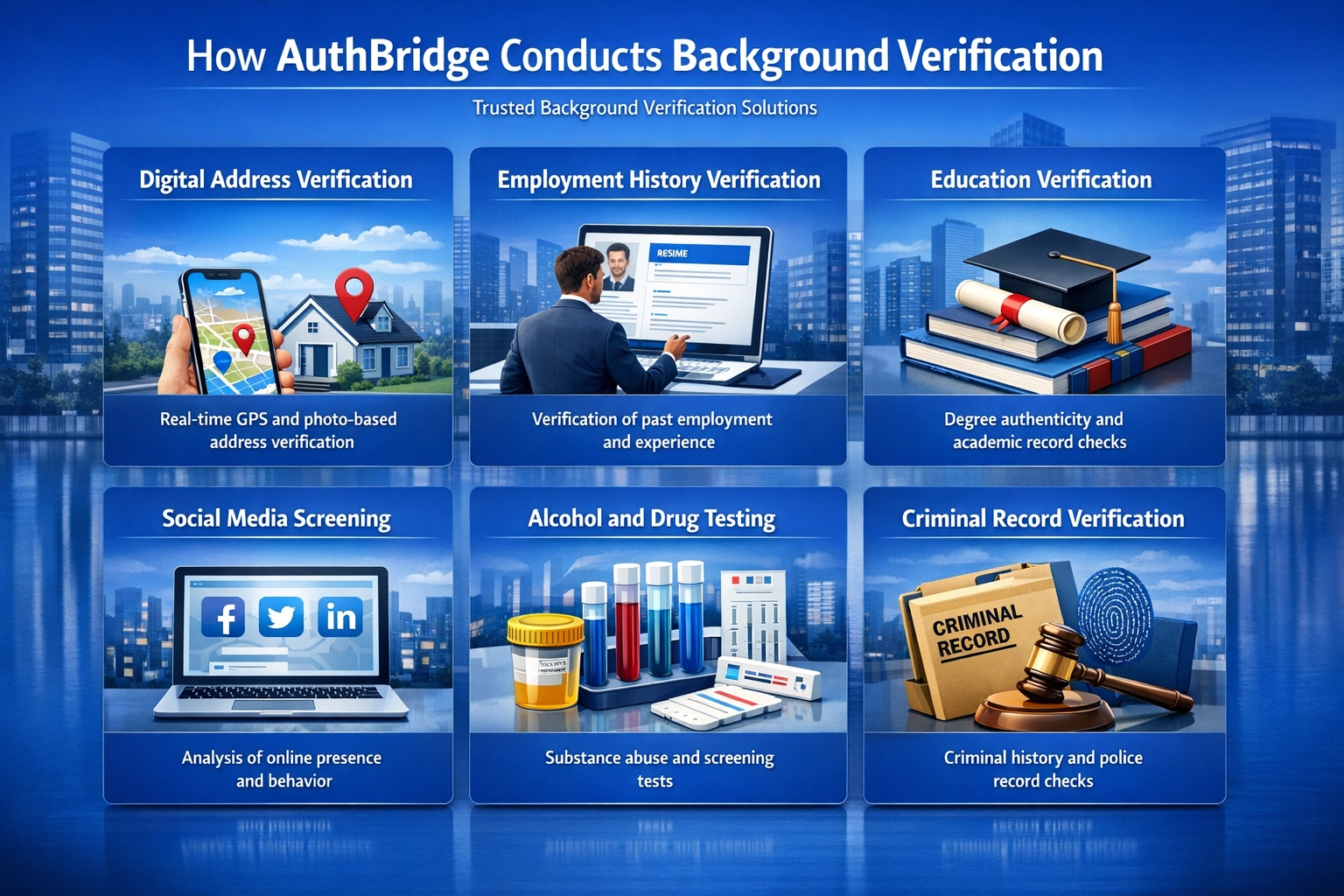
            How AuthBridge Conducts Background Verification

            Modern background verification is no longer limited to manual calls and paperwork. With advanced technology and digital platforms, companies like AuthBridge make the verification process faster, more accurate, and more transparent.

            Provided below is how AuthBridge performs some of the most important background checks:

            How_authbridge_conducts_background_verification_blog image2026

            a. Digital Address Verification

            Address verification helps confirm if the candidate’s residential details are genuine. AuthBridge uses a combination of digital tools and field verification to ensure accuracy.

            How it works:

            • Digital Submission: Candidates securely upload their address proof documents through AuthBridge’s platform.
            • Document Analysis: Advanced OCR (Optical Character Recognition) technology scans the documents and extracts relevant information.
            • Geolocation Verification: Geotagging technology captures the exact coordinates of the address to validate its authenticity.
            • Field Verification: In some cases, trained field agents visit the location and upload geotagged photos and data through the AuthBridge mobile app.
            • Automated Checks: The system compares location data with the submitted address to ensure accuracy.

            This multi-layered approach helps ensure that the address provided by the candidate is legitimate and verifiable.

            b. Employment History Verification

            Employment verification confirms whether a candidate’s past work experience is genuine.

            How it works:

            • Request Submission: The employer submits a verification request along with the candidate’s details.
            • Document Collection: Relevant employment documents are collected from the candidate or employer.
            • Database Screening: Candidate information is checked against AuthBridge’s extensive database.
            • Direct Employer Contact: Previous employers are contacted to verify job title, tenure, and other employment details.
            • AI-Based Analysis: AI tools analyse the collected data to identify inconsistencies or discrepancies.
            • Verification Report: A detailed report is generated and shared with the employer.

            This process helps organisations confirm that candidates truly have the experience they claim.

            c. Education Verification

            Education verification ensures that the academic qualifications listed by the candidate are genuine.

            How it works:

            • Candidate Input: The candidate provides details such as institution name, roll number, and graduation year.
            • Digital Verification: Platforms like DigiLocker allow secure access to university records.
            • Identity Confirmation: Candidates verify their identity through Aadhaar authentication and OTP validation.
            • Secure Document Retrieval: Verified degrees, marksheets, and certificates are retrieved directly from official databases.

            This digital approach reduces the risk of fake degrees or manipulated academic documents.

            d. Social Media Screening

            Social media screening helps organisations understand a candidate’s public online behaviour and identify potential reputational risks.

            How it works:

            • Screening Request: The employer submits candidate details and available social media profiles.
            • Technology-Based Analysis: AI and automation tools scan publicly available social media activity.
            • Profile Review: Analysts review platforms such as LinkedIn, Twitter, and Instagram.
            • Content Assessment: Content is evaluated for potential red flags such as inappropriate posts, discriminatory comments, or harmful behaviour.
            • Risk Scoring: The system assigns a risk score based on the findings.
            • Detailed Report: Employers receive a balanced report highlighting both positive and negative indicators.

            This helps companies protect their brand reputation and workplace culture.

            e. Alcohol and Drug Testing

            Drug and alcohol testing is commonly used in industries where safety and compliance are critical, such as manufacturing, logistics, and healthcare.

            How it works:

            • Test Scheduling: AuthBridge coordinates with the candidate to schedule a convenient testing appointment.
            • Sample Collection: Certified professionals collect samples such as urine, blood, hair, or saliva in a controlled environment.
            • Laboratory Testing: Samples are analysed in accredited laboratories using standardised procedures.
            • Quality Review: A Medical Review Officer evaluates the results to ensure accuracy and rule out false positives.
            • Confidential Reporting: Final results are securely shared with the employer.

            This process helps organisations maintain a safe and compliant workplace.

            f. Criminal Record Verification

            Criminal verification helps employers determine whether a candidate has any past legal cases or criminal records.

            How it works:

            • Case Initiation: Candidate details such as name and address are entered into the verification system.
            • Algorithm-Based Search: Advanced algorithms scan multiple legal and public databases for potential matches.
            • Initial Screening: The system generates possible matches based on similarity scores.
            • Manual Verification: Experts review the results to ensure accuracy and avoid false matches.
            • Final Reporting: Verified findings are compiled and shared with the employer.

            This process helps organisations make responsible hiring decisions and maintain workplace safety.

            By combining advanced technology, automation, and expert analysis, AuthBridge ensures that background verification is fast, reliable, and scalable. This allows organisations to confidently hire candidates while minimising risks and maintaining compliance.

            Conclusion

            A strong background verification process not only protects businesses from potential fraud or reputational damage but also helps create a safer and more transparent workplace.

            With advancements in technology, background verification has also become faster, more accurate, and easier to manage. Modern solutions allow organisations to conduct multiple checks efficiently while maintaining compliance with data protection and privacy regulations.

            Partnering with a trusted background verification provider like AuthBridge enables businesses to streamline their hiring processes while ensuring that every candidate is thoroughly vetted. By combining advanced technology, secure platforms, and industry expertise, AuthBridge helps organisations hire with greater confidence and build teams they can trust.

            Ultimately, background verification is not just a hiring formality; it is a strategic step toward building a secure, credible, and future-ready organisation.

            Frequently Asked Questions (FAQs)

            • Data Accuracy: Ensuring the accuracy and authenticity of the data collected from various sources.
            • Timeliness: Completing verifications within a strict timeline to meet hiring deadlines.
            • Compliance: Adhering to legal and regulatory requirements, including data privacy laws.
            • Complexity: Managing the complexity of verifying diverse information across different regions and industries.
            • Data Security: Protecting sensitive candidate information from breaches and unauthorised access.
            • Integration with HR Systems: Seamlessly integrating verification processes with the client’s HR management systems.
            • Communication with Employers: Maintaining effective communication with previous employers to obtain verification information.
            • Verification of International Records: Verifying records from foreign institutions and organisations can be time-consuming and complex.
            • Candidate Cooperation: Ensuring candidates provide complete and accurate information for verification.
            • Cost Management: Managing the costs associated with extensive background checks without compromising quality.

            Yes, Background Verification (BGV) services do cost money. The cost of these services can vary based on several factors:

            • Scope of Verification: The more comprehensive the verification, the higher the cost.
            • Volume of Checks: Companies that require verification for a large number of candidates may receive bulk pricing, which can lower the cost per check.
            • Turnaround Time: Expedited verification services often come at a premium due to the need for faster processing.
            • Geographic Coverage: Verifications that require checks in multiple countries or regions may incur additional costs due to the complexity and resources needed.
            • Level of Detail: More detailed checks, such as in-depth reference interviews or detailed financial background checks, will be more expensive.

            The employer informs the employee of the failure cause; minor issues may allow the employee to continue working with precautions, otherwise, the candidate is not hired.

            Conducting background checks in India requires a thorough and compliant approach to avoid common pitfalls. One significant mistake is having an inadequate verification scope, such as skipping crucial checks like criminal or financial backgrounds. Adhering to local laws, like the IT Act and GDPR, is essential to avoid legal issues, and using outdated or incorrect data sources can lead to inaccurate results.

            Timeliness and accuracy are key; delays can disrupt hiring, and ignoring red flags without investigation can lead to poor decisions. Proper documentation and understanding of verification results are vital for transparency. Avoiding these mistakes enhances the reliability of background checks, ensuring better hiring decisions and compliance with legal requirements.

            Typically, a background verification process takes between a few hours and a few days, depending on the depth and scope of the check.

            Yes, employee consent is mandatory before conducting any background verification.

            Best-Background-Verification-Company-In-Pune_blog-image

            Best Background Verification Company In Pune

            Introduction

            Hiring the right people is one of the most important decisions any organisation can make. But alongside the excitement comes a critical responsibility: making sure the person you hire is exactly who they claim to be. That’s why background verification has become an essential step in the hiring process.

            In a fast-growing business hub like Pune, where startups, IT companies, manufacturing, and emerging industries are constantly expanding their teams, making safe and informed hiring decisions is crucial. Companies need to be confident that the people they bring on board are trustworthy, qualified, and a good fit for the organisation.

            This is where trusted background verification companies play a key role. They help businesses verify important details such as employment history, education, identity, criminal records, and more, giving employers the clarity they need before making a final hiring decision.

            If you’re new to background checks, check out our detailed guide on what background verification is and how it works.

            Top 5 Background Verification Companies In Pune

            Several BGV companies offer specialised solutions to help organisations verify candidate credentials, reduce hiring risks, and maintain compliance with industry standards.

            Provided below are some of the most trusted BGV companies in Pune:

            a. AuthBridge

            When it comes to background verification in India, AuthBridge is one of the most recognised and trusted names in the industry. With more than two decades of experience, the company has played a major role in shaping how large-scale background verification is conducted across the country.

            As one of India’s leading background verification and authentication service providers, AuthBridge offers end-to-end verification solutions supported by advanced technology, strong compliance standards, and a wide global verification network.

            b. IDfy

            IDfy is one of the most technology-driven background verification companies in India. Built as a modern digital verification platform, it focuses on helping organisations complete background checks quickly, securely, and at scale.

            The platform uses automation and APIs to conduct important checks such as identity verification, criminal record checks, and digital address verification. It also connects with government databases for IDs like Aadhaar and PAN, allowing organisations to verify candidate information much faster than traditional methods.

            c. Krib Information Services

            Krib Information Services is one of India’s established background verification companies, known for providing reliable screening solutions to organisations across industries such as IT, healthcare, and manufacturing. With more than a decade of experience in the background verification space, the company helps businesses make informed and secure hiring decisions.

            d. Verifitech

            Verifitech is a well-known background verification company that provides comprehensive employee screening solutions to organisations across various industries, including finance, retail, hospitality, and corporate services. The company focuses on helping businesses reduce hiring risks by ensuring that candidate information is accurate and trustworthy.

            e. KPMG India

            KPMG India, part of the global KPMG network, offers background verification services as part of its broader risk advisory and compliance solutions. It supports large enterprises and multinational organisations that require detailed and compliant background screening processes, ensuring candidates meet regulatory requirements and maintain high standards of compliance.

            Why Choose AuthBridge For Background Verification In Pune?

            With several background verification companies operating in the market, choosing the right partner can make a significant difference in hiring quality, speed, and compliance. As a leading background verification company, AuthBridge combines advanced technology, industry expertise, and a comprehensive verification ecosystem to help businesses in Pune hire with confidence.

            Here are some key reasons why organisations trust AuthBridge for their background verification needs:

            a. Technology-Driven Solutions

            AuthBridge leverages advanced technologies such as artificial intelligence (AI), machine learning, and blockchain to streamline the verification process. These technologies enable faster turnaround times, improved accuracy, and automated risk detection, helping businesses make quicker and more reliable hiring decisions.

            b. Comprehensive Coverage

            As one of the most trusted background verification companies in India, AuthBridge offers extensive verification coverage across multiple domains. From employment and education checks to criminal records and global database screenings, the platform ensures thorough verification for both domestic and international candidates.

            c. Industry-Specific Expertise

            Different industries have different hiring risks and compliance requirements. AuthBridge provides customizable verification solutions tailored for industries such as IT, manufacturing, BFSI, healthcare, and startups, making it an ideal background verification company for Pune’s diverse business ecosystem.

            d. Scalability

            Whether a company is hiring a few professionals or conducting large-scale campus recruitment drives, AuthBridge offers highly scalable verification services. This flexibility allows businesses to manage hiring surges without compromising verification quality or speed.

            e. Real-Time Updates

            AuthBridge provides employers with user-friendly digital platform to track verification status in real time. HR teams can also access detailed verification reports, enabling transparency and faster decision-making throughout the hiring process.

            Conclusion

            For businesses in Pune, where industries such as IT, manufacturing, startups, and global enterprises are rapidly expanding, partnering with a reliable background verification company can significantly reduce hiring risks and improve decision-making.

            Professional background verification companies help organisations validate candidate credentials, detect discrepancies, and ensure compliance with industry standards. By investing in robust background screening processes, companies can protect their reputation, maintain workplace safety, and build stronger, more reliable teams.

            As one of India’s leading background verification companies, AuthBridge stands out for its technology-driven solutions, comprehensive verification services, and commitment to accuracy and security. By combining advanced digital platforms with deep industry expertise, AuthBridge enables HR leaders and organisations in Pune to hire with greater confidence and transparency.

            Whether you are a growing startup, an established enterprise, or a multinational organisation, choosing the right background verification company, such as AuthBridge, can help you streamline hiring, reduce risk, and create a more secure and trustworthy workplace.

            Politically-Exposed-Person-(PEP)-All-You-Need-To-Know-blog-image

            Politically Exposed Person (PEP): All You Need To Know

            What is a Politically Exposed Person (PEP)?

            If you’re wondering about the politically exposed person meaning or trying to understand what a PEP politically exposed person is, it refers to someone who holds, or has previously held, an important public position that grants them significant power, influence, or control over government decisions or public funds. This authority gives them greater access to money, contracts, or sensitive information, making them more vulnerable to risks such as bribery, corruption, and money laundering.

            Typical examples of PEPs include senior politicians, government ministers, judges, top military officials, and leaders of state-owned organisations. People in these positions often make decisions about policies, public money, or large contracts. As a result, their actions and financial dealings are often subject to closer scrutiny.

            A PEP classification extends beyond the individual. In many regulatory and compliance frameworks, close family members and business associates are also treated as PEPs, because financial activities may be conducted through them.

            The Global Regulatory View of Politically Exposed Persons

            The term, Politically Exposed Person (PEP), was first recognised by the Financial Action Task Force (FATF) in 2003 as part of its efforts to strengthen global measures against corruption and financial crime.

            The United Nations Conventions Against Corruption (UNCAC) also follows a similar understanding. It also extends this consideration to their close family members and associates, recognising that financial dealings can sometimes involve people within their personal and professional circles.

            Types of Politically Exposed Persons (PEPs)

            There are three main categories of PEPs:

            a. Domestic PEPs

            Domestic PEPs are people who hold or have held prominent public functions in their own country. In India, some examples of this include high-ranking officials such as members of Parliament, ministers, senior government officials, judges, military leaders, and executives of state-owned enterprises.

            Since these individuals have influence and access to public money, financial institutions keep a closer watch to make sure their position is not misused for personal gain.

            b. Foreign PEPs

            Foreign PEPs are individuals who hold or have held significant public roles in foreign countries. This category includes foreign heads of state, senior politicians, high-ranking military officials, and executives of foreign state-owned enterprises.

            Foreign PEPs are often seen as higher risk because money can move across borders, increasing the chances of international money laundering or corruption. That’s why stricter checks are usually required.

            c. International Organisation PEPs

            International Organisation PEPs are individuals who hold or have held senior leadership positions in major international organisations, such as the United Nations, the International Monetary Fund IMF), or the World Bank.

            Because these individuals operate on a global level and manage large amounts of resources, their financial activities are also monitored carefully to prevent abuse of power.

            In addition to this, it may also refer to: 

            d. Family Members and Close Associates

            PEP status doesn’t apply only to the official. It can also extend to people close to them. This includes spouses, children, parents, and close business partners.

            These individuals may have access to funds or confidential information connected to the PEP. For this reason, financial institutions often screen them as well to reduce the risk of indirect misuse of power.

            How Is Someone Identified as a Politically Exposed Person (PEP)?

            Determining whether someone is a Politically Exposed Person (PEP) usually comes down to the role they hold and the level of influence associated with that role. If an individual occupies a position that allows them to influence government decisions, manage public funds, shape public policy, or impact large financial transactions, they may be classified as a PEP.

            According to the FATF, individuals holding the following types of roles are typically considered politically exposed persons (PEPs):

            a. Individuals Holding Senior Government Positions

            Most commonly, this includes people working in high-level government roles and public administration. Examples include heads of state or government, ministers, members of parliament, governors of states or provinces, senior civil servants, and other high-ranking officials.

            b. Members of the Judiciary and Legal Authorities

            Senior members of the judicial system may also fall under the PEP category due to their influence over important legal decisions. Common examples include judges in supreme courts, constitutional courts, and members of other high-level judicial bodies.

            c. Diplomats and Senior Political Representatives

            Individuals representing their countries at international levels can also be considered PEPs. This includes ambassadors, heads of diplomatic missions, and charges d’affaires.

            d. Leaders in State-Owned Organisations and Public Institutions

            Senior executives working in organisations owned or controlled by the government may also be classified as PEPs due to their responsibility for managing public assets and resources. Examples include executives or board members of state-owned enterprises, members of central bank boards, and members of the court of auditors.

            e. Senior Military Officials

            High-ranking members of the armed forces may also be treated as PEPs because of their authority and influence within national security and defence structures.

            f. Individuals in International Organisations or Global Bodies

            People holding prominent roles in international or intergovernmental organisations may also be considered PEPs. This can include directors, board members of international organisations, and senior officials working in global institutions.

            g. Close Business Associates of a PEP

            A person may also be considered a PEP if they have strong financial or business connections with a PEP. This can include business partners, individuals who jointly own companies or assets with a PEP, or those who maintain strong financial ties with them.

            h. Family Members of a PEP

            Immediate family members are often included in PEP checks because financial transactions may sometimes involve relatives. This typically includes spouse or partners, parents, children, siblings and other close relatives.

            Politically Exposed Person Examples

            Sometimes it can be easier to understand the idea of a Politically Exposed Person (PEP) by looking at real-life examples. Provided below are some common examples to help understand who may or may not fall into the category of a PEP:

            Is a Judge a Politically Exposed Person?

            Yes, judges play a crucial role in interpreting and applying the law. Their decisions can affect individuals, organisations, and even government actions. Because of this significant authority, they are usually classified as Politically Exposed Persons (PEPs).

            Is a Senior Military Officer a Politically Exposed Person?

            Yes. High-ranking officers in the armed forces often have significant authority within defence and national security structures. Due to the influence they hold, they are often treated as PEPs.

            Is a Celebrity a Politically Exposed Person?

            No. Celebrities may be well-known and influential in culture or media, but they typically do not have authority over government decisions, laws, or public funds. Unless they also hold a public office, they are not considered PEPs.

            Is a Businessperson a Politically Exposed Person?

            Not always. A private business owner is generally not a PEP unless they hold a public office or have strong ties to someone who does. However, if they work closely with a PEP or share business interests with one, they may attract additional scrutiny.

            Is an Ambassador a Politically Exposed Person?

            Yes. Ambassadors represent their country in other nations and handle diplomatic relationships and negotiations. Because they operate at the intersection of politics and international relations, they are usually considered PEPs.

            Being a PEP is not about fame or wealth; it’s about influence and access to public power or resources. That’s why banks and regulated organisations carry out additional checks when dealing with such individuals, helping ensure transparency and reducing the risk of financial misuse.

            Why are Politically Exposed Persons Considered High-Risk?

            Politically Exposed Persons (PEPs) are not automatically involved in wrongdoing. However, because of the positions they hold and the influence they carry, they are considered to have a higher risk of being linked to financial crime. For this reason, banks and regulated organisations usually apply additional checks when dealing with individuals who fall into this category.

            a. Access to Public Funds and Government Resources

            One of the main reasons PEPs are closely monitored is their access to public funds and government resources. Many people in senior public roles oversee large budgets, infrastructure projects, or national development programmes. This means they may have authority over how significant amounts of public money are allocated or spent.

            b. Ability to Influence Policies and Financial Decisions

            Another factor is their ability to influence policies and financial decisions. Senior officials, ministers, legislators, and high-ranking administrators often play a role in shaping laws, approving projects, issuing licences, or awarding government contracts. Because of this influence, there is a possibility that individuals or organisations may attempt to gain unfair advantages through bribery or undue influence.

            c. Greater Exposure to Corruption-Related Risks

            PEPs may also face greater exposure to corruption-related risks. Their roles often place them in situations where powerful business interests, lobby groups, or external parties may try to influence decisions. This increased exposure is one of the reasons global financial regulations treat them as higher-risk individuals from a compliance perspective.

            In simple terms, PEPs are considered higher risk not because of who they are personally, but because their positions give them access to power, influence, and public resources, which makes careful monitoring necessary. This is where PEP screening becomes an important part of compliance and risk management processes.

            What Is PEP Screening?

            PEP screening is the process used by banks, financial institutions, and other regulated businesses to determine whether a person is a Politically Exposed Person (PEP) or is closely connected to one. The goal is not to assume that someone has done anything wrong. It simply means financial institutions and regulated businesses require additional verification and monitoring when dealing with them to ensure transparency and compliance with anti-money laundering and financial crime regulations.

            This process is particularly important for financial-heavy industries such as banks, NBFCs, fintech companies, insurance providers, and other organisations operating in the BFSI sector. These institutions regularly handle large financial transactions, loans, investments, and public funds. As a result, they must be careful about who they are doing business with.

            PEP screening usually begins during customer onboarding, when a business verifies the identity of a new customer as part of its Know Your Customer (KYC) process. At this stage, the individual’s name and details are checked against global PEP databases and watchlists that contain records of known politically exposed persons, along with their family members and close associates.

            However, the process does not stop at onboarding. Many organisations also carry out ongoing or periodic screening. This means existing customers are re-checked from time to time, because someone who was not previously a PEP may later become one after taking up a prominent public position.

            To conduct these checks efficiently, businesses rely on specialised compliance platforms and global risk databases that gather information from government records, regulatory bodies, international organisations, and other credible sources. If a potential match appears, the organisation may conduct further verification and apply enhanced due diligence to assess the level of risk involved.

            Why PEP Checks Are Important for Businesses

            By identifying individuals who hold influential public positions, businesses can take the necessary precautions to reduce potential financial and reputational risks.

            a. Helps Prevent Financial Crimes

            One of the primary reasons for conducting PEP checks is to prevent financial crimes such as bribery, corruption, and money laundering. People in positions of power may sometimes have access to large public funds or influence over government contracts and policies. Because of this, financial institutions and businesses need to ensure that their services are not misused for illegal financial activities.

            b. Required Under AML Regulations

            Many countries have strict Anti-Money Laundering (AML) and Counter-Terrorism Financing (CTF) laws. These regulations require organisations to properly verify their customers and identify if they are politically exposed persons. Banks, NBFCs, fintech companies, and other financial institutions are expected to apply additional checks when dealing with such individuals. If organisations fail to follow these rules, they may face penalties, legal action, or regulatory scrutiny.

            c. Protects Businesses from Reputational and Operational Risks

            If a company unknowingly becomes involved in transactions linked to corruption or misuse of public funds, it can harm the company’s reputation and reduce customer trust. Conducting proper PEP screening helps businesses make informed decisions before entering into business relationships.

            In simple terms, PEP checks help organisations identify potential risks early, stay compliant with global regulations, and ensure that their financial services are used responsibly and ethically.

            How AuthBridge Can Help with PEP Screening

            For businesses that operate in regulated and financial-heavy sectors, identifying politically exposed persons and managing the associated risks can be challenging. This is where AuthBridge can play an important role by helping organisations conduct reliable and efficient PEP screening and compliance checks.

            AuthBridge helps businesses identify PEPs, their close associates, and family members through advanced screening solutions that can be integrated into existing KYC, employee background verification (BGV), and third-party due diligence processes.

            For example, when organisations onboard new customers, employees, senior executives, or partners, AuthBridge can screen individuals against global PEP databases, watchlists, and adverse media sources. This allows businesses to quickly identify whether a person holds a prominent public position or has connections that may require additional scrutiny.

            This capability is particularly valuable for organisations operating in banks, NBFCs, fintech companies, insurance firms, and other financial-heavy sectors, where compliance requirements are strict, and the risks associated with financial crime are high. Screening both customers and employees ensures that organisations understand the background of the individuals they engage with.

            AuthBridge’s solutions also support ongoing monitoring. Since political roles and public positions can change over time, continuous screening helps organisations stay updated if an existing employee, customer, or partner later becomes a politically exposed person. This allows businesses to take timely action and maintain compliance with regulatory expectations.

            By combining automated screening, reliable data sources, and continuous monitoring, AuthBridge enables organisations to strengthen their AML and compliance processes while reducing manual effort.

            Conclusion

            Understanding who a Politically Exposed Person (PEP) is and why they require closer scrutiny has become an essential part of modern compliance and risk management.

            From identifying different types of PEPs, understanding how someone is classified as a PEP, and reviewing real-world examples, it becomes clear that the purpose of PEP screening is not to assume wrongdoing. Instead, it helps businesses recognise situations where additional transparency and monitoring may be necessary.

            For banks, NBFCs, fintech companies, and other regulated organisations, conducting proper PEP checks and screening processes plays a critical role in preventing financial crimes, maintaining regulatory compliance, and protecting their reputation. Whether during customer onboarding, employee hiring, or third-party partnerships, identifying high-risk profiles early allows organisations to make informed decisions and reduce potential exposure to fraud, corruption, or money laundering risks.

            With regulations continuing to evolve and public roles changing frequently, businesses increasingly rely on technology-driven verification and screening solutions to manage these challenges efficiently. By combining strong compliance practices with reliable screening tools, organisations can create a more transparent and secure financial ecosystem.

            In the end, effective PEP screening is not just a regulatory requirement; it is a responsible business practice that helps organisations build trust, maintain integrity, and operate confidently in today’s complex financial landscape.

            Hi! Let’s Schedule Your Call.

            To begin, Tell us a bit about “yourself”

            The most noteworthy aspects of our collaboration has been the ability to seamlessly onboard partners from all corners of India, for which our TAT has been reduced from multiple weeks to a few hours now.

            - Mr. Satyasiva Sundar Ruutray
            Vice President, F&A Commercial,
            Greenlam

            Thank You

            We have sent your download in your email.

            Case Study Download

            Want to Verify More Tin Numbers?

            Want to Verify More Pan Numbers?

            Want to Verify More UAN Numbers?

            Want to Verify More Pan Dob ?

            Want to Verify More Aadhar Numbers?

            Want to Check More Udyam Registration/Reference Numbers?

            Want to Verify More GST Numbers?