

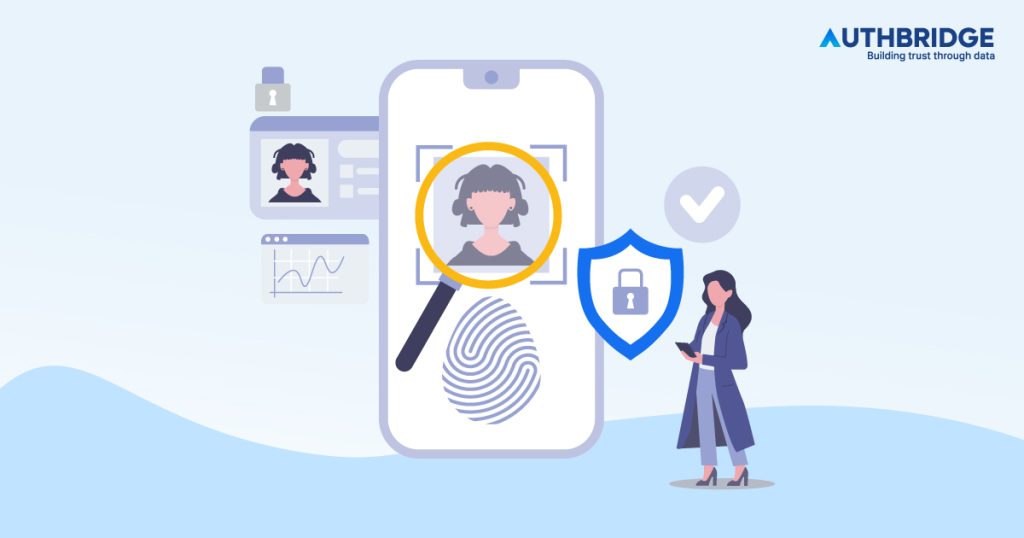

Digital KYC is an electronic method of verifying a customer’s identity, primarily used by banks, financial institutions, and service providers. The process involves customers submitting documents online, often paired with biometric or fingerprint verification, to prove their identity. With digital KYC solutions, businesses can quickly authenticate users without the need for face-to-face interaction, ensuring a seamless onboarding experience.
Unlike traditional KYC, which requires physical paperwork and in-person verification, Digital KYC enables identity verification through digital means such as OTP-based KYC, video-based KYC, or online KYC forms. This not only saves time but also reduces the friction in customer onboarding, making the process more accessible, especially in today’s global marketplace.
Digital KYC can be conducted through several methods, each designed to provide convenience while ensuring the highest level of security and compliance. The primary types of Digital KYC include Online KYC Forms, Video-based KYC, and OTP-based KYC. Each method offers different advantages based on the needs of the business and the customer.
1. Online KYC Form
One of the simplest forms of digital KYC verification, the online KYC form allows customers to complete the entire KYC process remotely. Customers are required to submit their details and upload supporting documents, such as a PAN card or Aadhaar card, through a secure online portal.
- Process:
- Customers fill in personal information (name, date of birth, address) in the form.
- They then upload necessary documents for verification, such as proof of identity and proof of address.
- The form can be signed either digitally or by printing, signing, and submitting a scanned copy.
This method is particularly popular for its ease of use and quick processing times, making it an efficient way to complete remote KYC without the need for face-to-face interactions.
2. Video-Based KYC
Video-based KYC, approved by regulatory bodies such as the Reserve Bank of India (RBI), is a highly secure and interactive method of conducting KYC verification. In this process, the customer and a representative from the service provider engage in a live video session to complete the KYC requirements.
- Process:
- The customer initiates the KYC process by scheduling a video call with the company’s representative.
- During the call, the representative captures a live photo or video of the customer and verifies their documents in real time.
- Geotagging is often used to confirm the customer’s location, ensuring they are within the legal jurisdiction.
This method has become widely adopted, especially during the COVID-19 pandemic, when physical interaction was limited. Video KYC provides the authenticity of an in-person meeting while maintaining the convenience of a remote setup.
3. OTP-Based KYC
OTP-based KYC is another widely used form of digital verification, particularly for services like opening digital wallets or activating financial accounts. This method leverages the Aadhaar eKYC system, allowing customers to verify their identity using their registered mobile number.
- Process:
- The customer inputs their Aadhaar number into the verification portal.
- An OTP (One-Time Password) is sent to the mobile number linked with their Aadhaar.
- Upon entering the OTP, the system verifies the customer’s identity, completing the KYC process.
This method is known for its simplicity and speed, making it an ideal solution for low-risk financial services such as prepaid wallets or basic savings accounts.
The transition from traditional KYC to Digital KYC has brought about several significant advantages for both businesses and customers. By adopting digital solutions, companies can streamline operations, improve customer experiences, and ensure compliance with regulatory standards. Here are some of the key benefits of Digital KYC:
1. Enhanced Customer Experience
One of the primary advantages of Digital KYC is the significant improvement in customer experience. The entire process is paperless, eliminating the need for customers to physically visit a branch or office to verify their identity. This convenience extends to customers worldwide, allowing companies to onboard clients from different regions with ease. With eKYC, customers can complete the process from the comfort of their homes using their mobile devices or computers.
2. Improved Security and Fraud Prevention
Digital KYC processes utilise advanced technologies such as biometric verification, facial recognition, and fingerprint verification to ensure that customers are who they claim to be. These technologies add an extra layer of security by making it difficult for fraudsters to impersonate others. Additionally, digital identity verification helps prevent common issues like identity theft, money laundering, and other types of fraud.
3. Cost-Efficiency
Traditional KYC methods often require a significant amount of paperwork and manual processing, which can be time-consuming and costly. With digital KYC technology, businesses can automate much of the verification process, reducing the need for physical resources and manpower. This not only speeds up the onboarding process but also cuts down on operational costs.
4. Compliance With Regulatory Standards
Regulatory authorities, such as the Reserve Bank of India (RBI) and the Securities and Exchange Board of India (SEBI), have laid down strict guidelines for KYC processes to prevent financial fraud. By adopting digital KYC solutions, businesses can ensure compliance with these regulations, reducing the risk of fines and penalties.
While Digital KYC offers numerous advantages, it also presents certain challenges that businesses must navigate to ensure effective implementation. These challenges range from data privacy concerns to integrating new technology into existing systems. Below are some of the key hurdles associated with Digital KYC.
1. Data Privacy and Security Concerns
One of the primary challenges with Digital KYC is the handling of sensitive customer data. Customers are often required to share personal information, including identification documents and biometric data, during the KYC process. Ensuring that this data is stored and processed securely is critical, as any data breach could lead to severe consequences, such as identity theft or financial fraud.
2. Regulatory Compliance
The regulatory landscape for KYC is complex and varies by jurisdiction. Governments and regulatory bodies regularly update their rules to address emerging threats, such as money laundering and terrorist financing. This constant evolution requires businesses to stay up to date with the latest digital KYC regulations to avoid non-compliance.
3. Integration With Legacy Systems
Many businesses, especially traditional financial institutions, rely on legacy systems that may not be fully compatible with modern digital KYC technology. Integrating digital KYC solutions into existing workflows can be a complex and time-consuming process, requiring significant investment in both time and resources.
4. Technology Adoption and User Accessibility
While Digital KYC offers remote and convenient solutions for identity verification, not all customers are equally tech-savvy. Some may find it difficult to navigate the digital process, particularly if it involves complex steps such as biometric verification or submitting documents through an unfamiliar platform.
5. Risk of False Positives and Fraud
Despite the enhanced security provided by biometric verification and facial recognition, no system is completely foolproof. There is still a risk of false positives or fraudulent attempts during the KYC process. For example, sophisticated cybercriminals may attempt to use fake or stolen documents to bypass the system.