


 India
India USA
USA UAE
UAE



Introduction
For years, data privacy conversations in India have revolved mostly around customers; what apps collect, how data is stored, and how all online platforms use personal information. Very few people stopped to think about employee data.
But with the arrival of the Digital Personal Data Protection (DPDP) Act 2025, which operationalises the DPDP Act 2023, this conversation is beginning to change. As per the 2025 rules, the law pushes organisations to be more thoughtful while collecting data, and states that personal data is personal, be it a customer, an employee, or someone who has already left an organisation.
When someone resigns, companies often disable their email accounts and revoke their system access. What is often left behind is their data. Organisations continue to hold experience letters, salary records, background verification documents, job role details, and employment history. These details are often required for audits, legal reasons, and future employment verification. Under the DPDP Act, each of these details counts as personal data. Over time, this creates a silent risk of sensitive information lying around with “no real ownership or control.“
That’s why employment verification is no longer “just an HR task.” It has now become part of the larger data protection community, where HR teams, legal, and compliance leaders must work together to ensure that post-exit credentials and verification processes are secure, consent-driven, and limited to clear, lawful purposes.
Let’s understand this in more detail.
What is the Digital Personal Data Protection (DPDP) Act?
The Digital Personal Data Protection (DPDP) Act, 2025, was officially notified by the Government of India on November 14, 2025, bringing the law into effect.
The law explains how personal data should be collected, used, stored, and deleted in the digital world. In extremely simple terms, the law asks organisations not to use someone’s personal data without their consent.
Personal data could be anything from a person’s name, phone number, email ID, job role details, salary details, employment tenure, experience letter, background verification records, and official documents. Most importantly, this law does not stop applying once an employee leaves an organisation. This is especially relevant during ex-employee verification processes, where companies often continue to access and use former employees’ data.
What is Ex-Employee Verification?
Ex-Employee Verification is the process of checking and confirming a person’s past employment details after they have left an organisation. Imagine this: Rahul worked at Company DBC for three years and then joined Company PQR. Before getting him onboarded, Company PQR will contact Company DBC to confirm a few details related to Rahul’s tenure. This is often done to ensure that the information provided on Rahul’s resume is true and reliable.
It helps build trust and ensures honesty in professional records, especially when someone applies for a new job.
What Does Ex-Employee Verification Include?
Ex-Employee Verification can cover several important details, such as:
- Experience verification – Confirming whether the person actually worked in the organisation
- Designation and tenure confirmation – Checking the job title and how long the person was employed
- Salary verification – Verifying the last drawn salary
- Background checks for new employees – Ensuring there were no major issues like fake experience
These checks are usually done through official documents, HR records, or direct communication with the previous employer.
Why is Ex-Employee Verification Important?
Ex-Employee Verification play an extremely important role in shaping a person’s career and credibility. Every organisation wants an honest employee, and verification helps them make safe hiring decisions.
In today’s competitive world, where resumes matter a lot, Ex-Employee Verification acts like a truth check, protecting both employers and employees and ensuring fairness for everyone.
And this takes us to an important question: Why Does Employment Verification Take Place?
Employment verification is basically a way for companies to check that the information shared by candidates is true. This often helps prevent fraud, keep the workplace safe, and build trust among employees.
Think about it this way: hiring the wrong person isn’t just costly, it can affect a company’s reputation, team morale, and even employee safety. By verifying a candidate’s background, companies make sure they’re making smart, safe, and reliable hiring decisions.
Traditional Employment Verification vs. the DPDP Era
Traditionally, ex-employee verification was mostly manual. HR teams would share scanned experience letters over email, make phone calls to previous managers, or manually check records stored in old files and spreadsheets.
While these checks have always been part of HR processes, the DPDP Act now changes how this data can be handled, especially for former employees. Every access to ex-employee data must now be purpose-driven, consent-based, and traceable. HR teams cannot simply send someone’s experience letter over email without proper authorisation. This change protects the former employee while helping companies stay compliant with the law.
Consent: The Foundation of Modern Verification
One of the biggest changes the DPDP Act brings is the need for candidate consent. Before verifying a former employee’s data, the company must get explicit permission from the individual. This ensures:
- The former employee knows who is accessing their data.
- Only authorised personnel can use the information for a valid reason.
- Companies have a clear record (audit trail) showing consent was given.
Without consent, verification cannot legally take place. This protects the individual’s privacy and ensures companies avoid potential compliance issues. In simple words: no consent, no verification.
Why HR Is Required in Ex-Employee Verification
The HR team plays a central role in managing ex-employee data and verification processes because they are the official owners of all employee data. They ensure that all information shared is accurate and authentic.
Under the DPDP Act, HR now has additional responsibilities:
- Ensuring data is shared lawfully and only for authorised purposes
- Obtaining explicit consent from the candidate before verification
- Maintaining secure access to records
- Enforcing limited retention, deleting data once its purpose is complete
By fulfilling these duties, HR ensures that verification processes are compliant, transparent, and secure, protecting both the organisation and former employees.
Best Practices for a Secure Credential Lifecycle
To follow DPDP rules and protect data, organisations should adopt these best practices when handling post-exit employee information:
- Use secure digital systems instead of forwarding documents via email
- Limit access to authorised HR personnel or verification teams only
- Keep clear records of who accessed data and why
- Collect and verify data only for specific purposes, like background checks or legal requirements
- Set retention timelines and delete information once it’s no longer needed
- Ensure authenticity by using official HR records rather than informal emails or documents
By following these steps, companies can build a verification process that is faster, safer, and compliant.
Why DPDP-Compliant Verification is Beneficial
Once you know all these DPDP rules, it’s important to understand why implementing a DPDP-compliant system is beneficial. It brings several advantages:
- Transparency: Employees and ex-employees know exactly how their data is used.
- Accuracy: Information is sourced from authorised records, reducing errors.
- Security: Sensitive data is protected from misuse or leaks.
- Efficiency: Digital workflows speed up verification and reduce HR workload.
- Trust: Candidates feel confident that their personal information is handled responsibly.
In short, a compliant verification system not only avoids legal risk but also strengthens relationships with former employees.
How AuthBridge Can Help
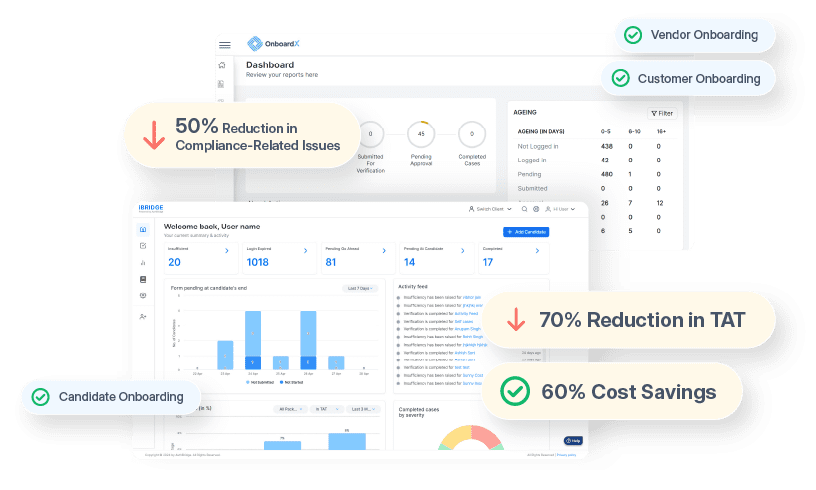
As one of India’s largest background verification and authentication providers, AuthBridge helps organisations modernise their verification processes while staying fully DPDP-compliant. This can be done through AuthNumber, which is a unified platform for consent-driven credential verification. This helps streamline your verification processes so you can focus on core business activities, store all verification records in a centralised, encrypted repository that ensures compliance, audit readiness, and long-term accessibility, and access all verified information directly from trusted sources and regulators, eliminating the risk of tampered or outdated data.
Here’s how AuthBridge can help you:
- Secure and centralised verification: All documents and data are stored safely in one platform.
- Consent-driven workflows: Verification only happens after candidate approval.
- Traceable and auditable: Every access is logged, making compliance reporting easy.
- Faster and more accurate checks: Digital systems reduce manual errors and speed up verification.
- Expertise in HR compliance: AuthBridge helps organisations adopt best practices for ex-employee data management.
With AuthBridge, organisations can focus on building trust with their employees and ex-employees while staying fully aligned with the DPDP Act.
Conclusion
The DPDP Act is more than just a compliance requirement. It is a call to modernise how we manage employee and ex-employee data. Employment verification is no longer a simple HR task; it is now a privacy-sensitive process that requires clear consent, secure handling, and limited use.
By adopting digital, consent-based, and traceable verification systems, companies can protect sensitive data, reduce operational risks, and maintain trust with current and former employees. The future of employment verification is not just about checking credentials; it is about building secure, transparent, and reliable credential lifecycles.