


Introduction
Verifying the authenticity of vendors, suppliers, and business partners is essential for maintaining compliance and reducing fraud risks.
From protecting input tax credit (ITC) claims to enabling faster vendor onboarding, GST verification plays a key role in building trustworthy business relationships.
In this blog, we explore what GST verification is, why it matters, and how businesses can automate the process using GST Verification APIs.
What is GST Verification?
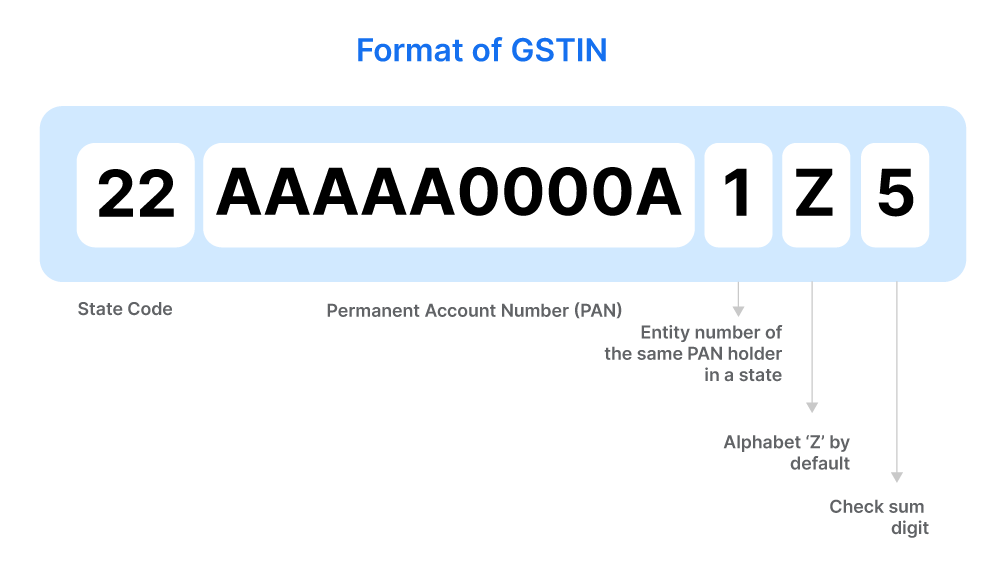
GST verification is the process of checking whether a Goods and Services Tax Identification Number (GSTIN) is valid, active, and linked to a registered business. Businesses use this verification to confirm the authenticity of vendors, suppliers, customers, and other business partners before starting a transaction.
A GST verification check provides key details such as the registered business name, GST status, taxpayer type, registration date, and state of registration. This information helps organisations verify business credentials, reduce fraud risks, and make informed decisions with greater confidence.
Understanding GST Registration Status
A GST verification check does more than confirm whether a GSTIN exists. It also reveals the current registration status of a business.
- Active GSTIN: An Active GSTIN indicates that the business is currently registered under GST and can legally carry out taxable transactions.
- Suspended GSTIN: A Suspended GSTIN means the GST registration has been temporarily restricted by tax authorities or is under review.
- Cancelled GSTIN: A Cancelled GSTIN indicates that the GST registration is no longer valid.
What Should Businesses Do If A Vendor's GSTIN Is Cancelled?
Discovering that a vendor’s GSTIN has been cancelled can create compliance, operational, and financial risks. Before processing invoices, releasing payments, or continuing a business relationship, organisations should take steps to understand the reason behind the cancellation and assess the potential impact.
- Verify the GST registration status
- Contact the vendor for clarification
- Review pending transactions and invoices
- Conduct additional due diligence
- Update vendor records
- Assess compliance and ITC implications
- Implement ongoing monitoring
Why GST Verification Is More Important Than Ever In 2026?
A GST Identification Number (GSTIN) serves as proof that a business is registered under the Goods and Services Tax framework.
GST number verification helps organisations confirm that they are dealing with legitimate businesses. It also helps identify cases where a GSTIN has been suspended, cancelled, or misused. For example, a fraudster may provide a genuine PAN but pair it with an inactive or incorrect GSTIN to bypass verification checks. Validating GST details helps businesses detect such risks at an early stage.
a. Strengthen B2B Transactions
GST verification helps businesses confirm that suppliers, distributors, and service providers are genuine before processing payments or entering into contracts. This builds trust and supports smoother business operations.
b. Reduce Fraud Risks
Fake businesses, shell entities, and fraudulent vendors often use incorrect or inactive GST details. Regular verification helps organisations identify suspicious records and minimise financial and compliance risks.
c. Support Vendor Onboarding and Compliance
Many organisations include GST verification as part of their vendor onboarding and business verification workflows. This helps streamline due diligence processes while ensuring compliance with regulatory requirements.
d. Improve Business Decision-Making
Access to verified business information enables organisations to assess potential partners more confidently and maintain accurate vendor databases.
How To Verify GST Number Online
Businesses can verify a GST number online through the official GST portal. The process is simple, free, and helps confirm whether a GSTIN is valid and linked to a registered business.
Method 1: Verify GST Number Through the GST Portal
Follow these steps to verify a GSTIN online:
- Visit the official GST portal.
- Navigate to the Search Taxpayer section.
- Select Search by GSTIN/UIN.
- Enter the 15-digit GSTIN you want to verify.
- Complete the captcha verification and submit the request.
- Review the GST verification results displayed on the screen.
What Information Can You Retrieve?
A GST verification check typically provides the following details:
- Registered business name
- GST registration status (Active, Cancelled, or Suspended)
- Taxpayer type
- Date of GST registration
- State of registration
- Trade name of the business (where applicable)
Verifying these details helps businesses confirm the authenticity of vendors, suppliers, and customers before establishing a business relationship. It also supports compliance efforts and helps reduce the risk of dealing with fraudulent or non-compliant entities.
Why Verify GST Numbers Regularly?
A GSTIN that was valid during onboarding may later become inactive, suspended, or cancelled. Regular verification helps businesses maintain accurate vendor records and strengthen compliance processes.
For organisations that need to verify large volumes of GST numbers, manual checks can be time-consuming. In such cases, GST Verification APIs can automate the process and provide real-time verification at scale.
GST Number Search By PAN: How to Find GSTIN Using PAN
The official GST portal allows users to search GST records using a PAN. This makes it easier to check whether a business is registered under GST and view the GSTINs associated with that PAN across different states.
To perform GST Verification Online using a PAN:
- Visit the GST portal.
- Navigate to the taxpayer search section.
- Select the option to search by PAN.
- Enter the 10-character PAN and complete the captcha verification.
- View the GSTINs linked to the PAN along with their registration status.
Can One PAN Have Multiple GSTINs?
Yes. A single Permanent Account Number (PAN) can be linked to multiple GST Identification Numbers (GSTINs). Under the GST framework, businesses receive a separate GSTIN for each state or union territory in which they are registered.
For example, if a company operates in Maharashtra, Karnataka, and Delhi, it will typically have a different GSTIN for each state, even though all registrations are linked to the same PAN.
Why Businesses Need GST Verification
GST Verification helps organisations validate business credentials, reduce compliance risks, and make informed decisions before entering into commercial relationships.
Whether performed manually through the GST portal or through GST Verification Online solutions, the process helps businesses establish trust while maintaining compliance with regulatory requirements.
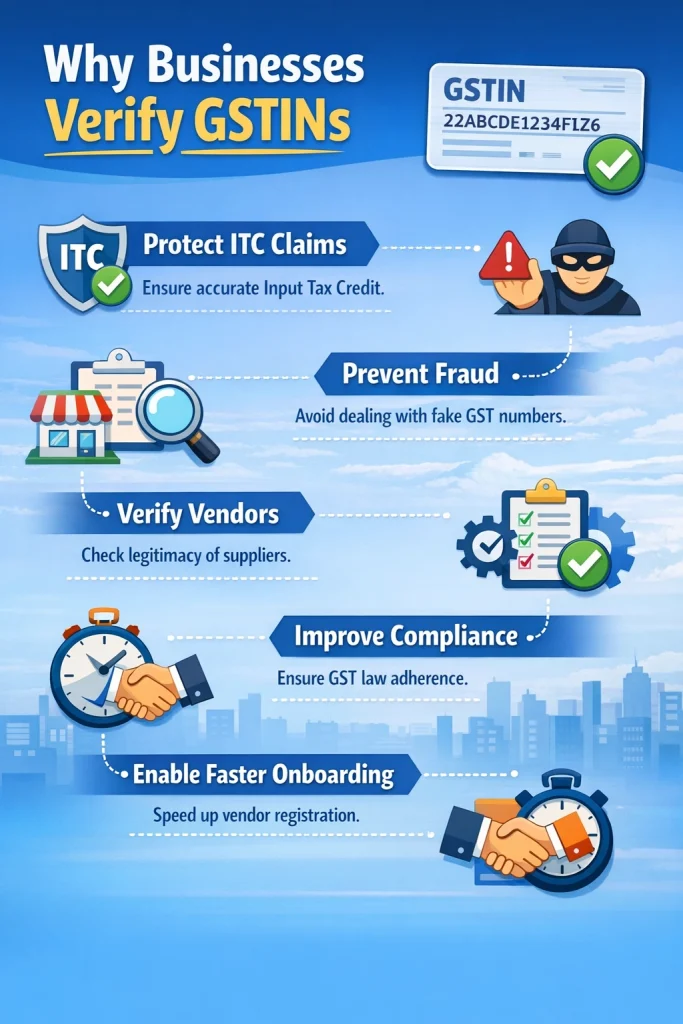
a. Prevent Tax and Invoice Fraud
GST verification helps businesses identify invalid or suspicious GST registrations before onboarding vendors or processing transactions. This reduces exposure to invoice fraud, fake registrations, and tax-related risks.
b. Detect Identity Misuse
Verifying GST details helps organisations confirm that a GSTIN belongs to the entity claiming ownership. This helps detect cases where fraudsters misuse another business’s registration details.
c. Identify Fake and Non-Compliant Businesses
Businesses can use GST verification to identify shell entities, inactive registrations, and non-existent businesses that may attempt to participate in commercial transactions using incorrect GST information.
d. Protect Input Tax Credit (ITC) Claims
It is one of the strongest business drivers for GST verification.
Verifying vendor GST status helps organisations reduce the risk of compliance issues associated with transactions involving inactive or non-compliant entities.
e. Enable Reliable B2B Transactions
GST verification helps businesses confirm the legitimacy of suppliers, distributors, and service providers. This builds trust and supports smoother business relationships.
f. Strengthen Compliance and Vendor Due Diligence
GST verification forms an important part of vendor onboarding and compliance workflows. It helps organisations maintain accurate records and verify that business partners are registered under the GST framework.
Why An Active GSTIN Matters
An active GSTIN indicates that a business is registered under the GST framework and is authorised to collect and remit GST. Verifying the GST status of vendors helps businesses ensure they are dealing with legitimate entities and maintain accurate records for tax and compliance purposes.
Regular GST Verification and GST Number Verification can help organisations identify changes in a vendor’s GST status, such as suspension or cancellation, before they affect business operations.
GST Verification At Scale: Why Businesses Need Automation
Manual GST checks may work when verifying a small number of businesses. However, organisations that onboard hundreds or thousands of vendors, suppliers, sellers, or business partners need a faster and more scalable approach.
As businesses grow, manual verification through government portals can increase turnaround times, create operational bottlenecks, and introduce the risk of human error. This is where automated GST Verification solutions become valuable.
Why Businesses Perform GST Verification At Scale
Many industries rely on large-scale GST Number Verification to maintain compliance and reduce business risks.
a. Marketplace Seller Onboarding
Online marketplaces often verify seller GST details before activating accounts. Regular re-verification also helps identify registrations that have become inactive, suspended, or cancelled after onboarding.
b. Vendor Due Diligence For Lenders
Banks, NBFCs, and fintech companies frequently use GST Verification Online as part of their business verification and due diligence processes. GST registration details can help validate business credentials during onboarding and risk assessment.
c. Logistics And Supply Chain Operations
Logistics providers, warehouse operators, and transport partners often require GST validation before onboarding vendors and service providers. Accurate GST records help support invoicing, compliance, and procurement workflows.
d. B2B Software And Enterprise Services
Businesses that generate GST-compliant invoices often need to validate customer GST information during onboarding. GST Online Verification helps ensure that the correct GST registration details are captured from the beginning.
As organisations continue to digitise onboarding processes, GST No. Verification has become an important part of Know Your Business (KYB), procurement, and compliance workflows.
GST Verification Across Industries
Businesses across industries rely on GST Verification to validate business identities, reduce fraud risks, and strengthen compliance processes. Whether onboarding a new seller, supplier, borrower, or business customer, verifying GST details helps organisations make informed decisions and build trustworthy business relationships.
As digital onboarding becomes more common, GST Verification by PAN have become an important tool for organisations operating at scale.
a. Marketplace Seller Onboarding
Online marketplaces onboard thousands of sellers across different categories and geographies. Verifying GST details helps marketplace operators confirm that sellers are registered businesses and maintain accurate seller records.
Regular GST Online Verification can help marketplaces:
- Validate seller credentials
- Strengthen onboarding processes
- Reduce the risk of fraudulent seller accounts
- Support regulatory compliance requirements
b. Banking And NBFCs
Banks and Non-Banking Financial Companies (NBFCs) often work with businesses during lending, vendor onboarding, and corporate account opening processes.
GST Verification helps financial institutions:
- Validate business registrations
- Strengthen customer due diligence
- Verify business existence and operational details
- Support risk assessment and compliance workflows
c. Fintech
Fintech companies rely on fast and digital onboarding experiences. Many fintech platforms use GST verification to verify business customers in real time and reduce manual verification efforts.
GST verification can support:
- Business onboarding
- Merchant verification
- Lending assessments
- Compliance and risk management processes
d. Logistics And Transportation
Logistics providers frequently work with vendors, transport partners, warehouse operators, and business customers across multiple states.
Conducting GST No. verification helps organisations:
- Verify business partners
- Maintain accurate records
- Reduce onboarding risks
- Improve supplier and partner management
e. E-Commerce
E-commerce businesses often interact with large networks of sellers, suppliers, and service providers. Verifying GST details helps ensure that business partners are registered and compliant with applicable regulations.
Regular GST number verification also supports smoother vendor management and procurement operations.
GST Verification in KYB and Business Onboarding Workflows
GST verification is rarely a standalone process. Most organisations use it as part of a broader Know Your Business (KYB) and business onboarding framework to validate the identity, legitimacy, and compliance status of vendors, suppliers, merchants, and business customers.
By incorporating GST verification into onboarding workflows, businesses can strengthen due diligence, reduce fraud risks, and improve compliance across the customer lifecycle.
Marketplace Seller Onboarding
Online marketplaces often onboard large numbers of sellers across different categories and locations. Verifying GST details during onboarding helps marketplaces confirm that sellers are registered businesses and that their GST information matches their business credentials.
A typical seller onboarding process may include:
- PAN verification
- GST Verification
- Bank account verification
- Business address verification
- Seller activation
Businesses should verify GST details at the time of onboarding because GST registration status can change over time. Automated verification helps marketplaces identify inactive, suspended, or cancelled registrations before activating seller accounts.
Vendor Onboarding And Procurement
Vendor onboarding is one of the most common use cases for GST number verification. Procurement teams often work with a large network of suppliers, service providers, and contractors, making it important to validate business credentials before establishing commercial relationships.
Regular GST verification helps organisations:
- Verify supplier legitimacy
- Maintain accurate vendor records
- Strengthen due diligence processes
- Support procurement compliance requirements
Many organisations also conduct periodic re-verification to identify changes in GST status and maintain an up-to-date vendor database.
KYB, AML And Compliance Checks
For high-value business relationships, GST verification often works alongside broader Know Your Business (KYB) and Anti-Money Laundering (AML) checks. Together, these verification processes help organisations gain a more complete understanding of the businesses they engage with.
Combining GST Verification by PAN with business verification and compliance screening can help organisations:
- Validate business identities
- Assess business legitimacy
- Support regulatory compliance requirements
- Strengthen risk management frameworks
Lending And MSME Underwriting
Banks, NBFCs, and fintech companies frequently use GST-related information as part of business onboarding and credit assessment processes. GST registration details can help financial institutions verify the existence of a business and support customer due diligence efforts.
When combined with other business verification checks, GST No. Verification helps lenders build a more comprehensive view of a business before making onboarding or lending decisions.
Logistics And Fleet Partner Onboarding
Logistics companies regularly onboard transport operators, warehouse providers, delivery partners, and other service providers. Verifying GST details helps confirm business registrations and supports compliance requirements throughout the partnership lifecycle.
Since business information can change over time, many organisations perform periodic GST verification checks to monitor registration status and maintain accurate partner records.
Common GST Fraud Risks Businesses Face
As businesses increasingly adopt digital onboarding and remote transactions, fraud risks have become more sophisticated. Fraudsters often exploit gaps in vendor verification, invoice validation, and compliance processes to create fake business identities or claim tax benefits unlawfully.
Regular GST verification helps organisations identify suspicious entities and reduce the risk of financial and compliance-related losses.
a. Fake GST Registrations
Fraudsters may use incorrect, forged, or misleading business information to obtain or misuse GST registrations. At first glance, these registrations may appear legitimate, making it difficult for businesses to identify risks without proper verification.
Conducting GST online verification helps organisations validate GST registration details and confirm that the GSTIN belongs to the business claiming ownership.
b. Phantom Dealers
Phantom dealers are entities that exist only on paper and have little or no genuine business activity. These entities are often created to generate fake invoices or facilitate fraudulent transactions.
Performing regular GST no. verification helps businesses identify inconsistencies in registration details and avoid onboarding non-genuine suppliers or vendors.
c. Shell Companies
Shell companies are businesses with limited or no actual operations that may be used to conceal ownership, route funds, or support fraudulent activities. In some cases, these entities are used to issue invoices without the actual supply of goods or services.
Verifying GST records helps organisations strengthen due diligence processes and assess the legitimacy of potential business partners.
d. Identity Misuse
Identity misuse occurs when fraudsters use another company’s GST details, business credentials, or registration information without authorisation. This can result in fraudulent transactions, fake invoices, and reputational risks for both parties involved.
Regular GST verification helps organisations cross-check business information and identify potential mismatches before entering into commercial relationships.
Manual GST Verification Vs GST Verification API
| Feature | Manual Verification | GST Verification API |
|---|---|---|
| Speed | Slow | Real-Time |
| Effort | High | Low |
| Bulk Verification | No | Yes | Accuracy | Moderate | High | Scalability | Limited | Enterprise-Ready |
Businesses can verify GST details either manually through the GST portal or by integrating a GST Verification API into their workflows. While manual verification may work for occasional checks, it often becomes time-consuming and inefficient when dealing with large volumes of vendors, suppliers, merchants, or business customers.
Manual GST Verification
Manual GST Verification involves visiting the GST portal, entering a GSTIN, and reviewing the available taxpayer information. While this method is useful for occasional checks, it can become challenging when organisations need to verify hundreds or thousands of GST registrations regularly.
Common challenges include:
- Time-consuming verification processes
- Manual data entry errors
- Difficulty managing large verification volumes
- Limited operational efficiency
- Increased compliance workload
GST Verification API
A GST Verification API automates the verification process by validating GST details directly within existing business systems and workflows. Instead of manually checking each GSTIN, businesses can perform GST Verification Online in real time through a single integration.
This enables organisations to:
- Verify GST registrations instantly
- Automate onboarding workflows
- Perform bulk GST checks
- Improve operational efficiency
- Reduce manual effort
- Support compliance at scale
Using GST Verification API for Fast and Secure Vendor Onboarding
The GST Verification API is extremely important if you want to verify the GST registration status of a company.
Businesses can also use it to verify the GST registration status of their suppliers and customers and prevent fraudulent activities like identity theft, tax evasion, fake transactions, phantom dealers, etc.
The API typically accepts the GSTIN as the API request and responds with validated data such as the GSTIN, Business Name, Constitution of Business, Address, etc.
Leveraging the GST verification API helps businesses with faster onboarding, scalability, and smooth KYC verification with easy integrations.
When Should Businesses Use A GST Verification API?
As vendor networks, customer bases, and transaction volumes grow, manual verification processes often struggle to keep pace. Businesses operating in sectors such as fintech, banking, e-commerce, logistics, marketplaces, and procurement frequently require faster and more scalable verification methods.
By integrating GST number verification into automated workflows, organisations can improve decision-making, strengthen compliance processes, and reduce verification turnaround times.
How GST Verification APIs Work
A GST Verification API enables businesses to validate GST registration details automatically without manually checking records on the GST portal.
The process is simple and designed for real-time decision-making.
GST Verification API Workflow
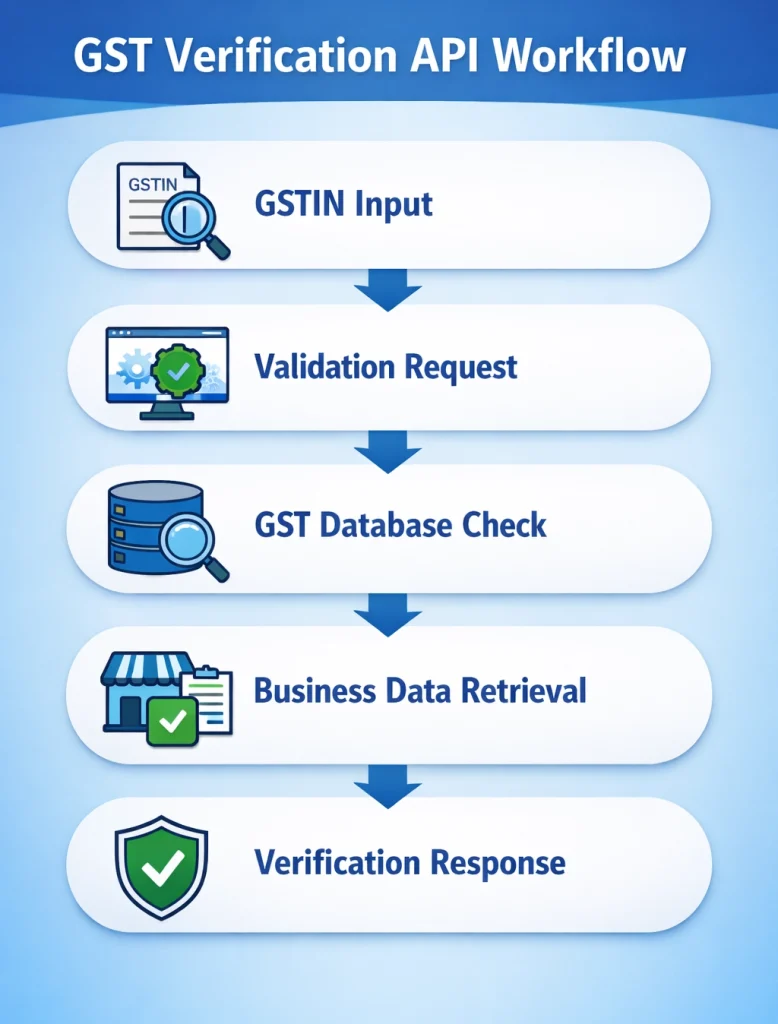
When a GSTIN is submitted, the API validates the number and retrieves relevant business information associated with the registration.
A typical response may include GST registration status, legal business name, trade name, registration date, taxpayer category, state jurisdiction, and constitution of business.
Real-Time GST Verification
Modern APIs enable real-time GST Verification, allowing businesses to validate GST registrations during onboarding, procurement, and compliance workflows.
Bulk GST Verification
Large enterprises often need to verify hundreds or thousands of GST registrations simultaneously. Bulk verification capabilities help automate this process and reduce manual effort.
Seamless API Integration
GST Verification APIs can be integrated into existing onboarding platforms, procurement systems, CRMs, ERP solutions, and compliance workflows. This allows organisations to perform GST Verification by PAN, GST validation, and business verification checks within a single workflow.
By automating GST Verification Online, businesses can improve operational efficiency and make faster verification decisions.
Benefits Of GST Verification APIs
As businesses grow, managing vendor, supplier, merchant, and customer verification manually becomes increasingly challenging. Enterprise organisations often process thousands of onboarding requests, invoices, and compliance checks every month. In such scenarios, a GST Verification API helps automate verification workflows, improve operational efficiency, and strengthen compliance controls.
By integrating GST verification into existing systems, businesses can verify GST details in real time and make faster, more informed decisions.
a. Faster Vendor And Customer Onboarding
Manual verification processes can slow down onboarding, especially when businesses need to validate large volumes of GST registrations. A GST verification API enables instant verification, helping teams complete onboarding checks in real time.
This allows organisations to:
- Reduce onboarding turnaround times
- Minimise manual verification efforts
- Accelerate vendor and customer approvals
- Improve operational efficiency
b. Reduced Fraud Risks
Fraudulent vendors, fake GST registrations, and identity misuse can expose businesses to financial and compliance risks. Automated GST Online Verification helps organisations validate GST details before onboarding vendors or processing transactions.
As a result, businesses can:
- Identify suspicious registrations early
- Strengthen vendor due diligence
- Reduce exposure to invoice fraud
- Improve supplier verification processes
c. Better Compliance Management
Regulatory compliance requires businesses to maintain accurate and up-to-date records of vendors, suppliers, and business partners. Automated GST no. verification helps ensure that GST information remains current and validated throughout the business relationship.
This supports:
- Vendor compliance checks
- Audit preparedness
- Accurate record keeping
- Stronger governance processes
d. Real-Time Decision Making
Business decisions often depend on accurate information. A GST Verification API provides instant access to GST registration details, enabling teams to verify information without delays.
Real-time verification helps organisations:
- Make faster onboarding decisions
- Improve procurement workflows
- Support lending and risk assessments
- Reduce verification bottlenecks
Why AuthBridge’s GST Verification API?

With AuthBridge’s GST Verification API, you can validate the authenticity of GST numbers in real time and onboard genuine and compliant business partners while being assured of the industry’s fastest onboarding turnaround time.
The plug-and-play APIs help digitise and scale your operations with easy-to-activate, simple-to-use data exchange mechanisms.
GSTIN Active Status
Enter the provided GSTIN number and verify if the provided account is active and valid.
GST Filing Details
Verify GST numbers, Status, Taxpayer types, and state bifurcation.
Credibility Analysis
Dig deeper with details like mode of filing and return type bifurcation for further analysis.
AuthBridge GST Verification Solutions
AuthBridge offers multiple GST verification capabilities to support different business requirements:
- Know Your GST – Retrieves GST registrations linked to a PAN.
- PAN-GST Linkage Verification – Validates GST registrations associated with a PAN.
- GSTIN View and Track Return – Fetches GST return-related information for a financial year.
- GST Taxpayer Verification – Fetches taxpayer details and GST registration status.
Whether you are onboarding vendors, verifying suppliers, validating merchants, or conducting business due diligence, AuthBridge’s GST Verification API helps simplify verification, strengthen compliance, and support faster business decisions.
Conclusion
GST verification has become an essential part of modern business onboarding, compliance, and risk management. Whether you are verifying vendors, suppliers, merchants, or business customers, validating GST details helps build trust, improve due diligence, and reduce exposure to fraud and compliance risks.
From protecting Input Tax Credit (ITC) claims to identifying fake registrations, shell entities, and inactive GSTINs, regular verification enables businesses to make more informed decisions throughout the business lifecycle. As organisations grow and manage larger networks of business partners, manual verification processes often become difficult to scale.
This is where automated GST verification solutions can make a significant difference. By integrating GST verification into onboarding and compliance workflows, businesses can verify GST details in real time, improve operational efficiency, strengthen compliance controls, and accelerate decision-making.
AuthBridge’s GST Verification API enables businesses to validate GST registrations instantly, perform bulk verification checks, and streamline vendor onboarding with seamless integrations and real-time insights. As compliance requirements continue to evolve, adopting a robust GST verification framework can help businesses stay compliant, reduce risk, and build stronger business relationships with confidence.
Looking to automate GST verification at scale?
AuthBridge’s GST Verification API helps businesses verify GSTINs in real time, validate business credentials, perform bulk verification checks, and streamline vendor onboarding workflows. Get in touch with our experts to explore a solution tailored to your business needs.
Frequently Asked Questions (FAQs)
You can verify a GST number online through the GST portal. Simply enter the GSTIN in the taxpayer search section to view details such as the registered business name, GST status, taxpayer type, registration date, and state of registration.
Yes. The GST portal allows businesses and individuals to verify GST registration details free of charge. However, organisations that require bulk verification or automated workflows often use GST Verification APIs to streamline the process.
A GSTIN is a unique 15-character alphanumeric identifier assigned to GST-registered businesses. It contains the state code, PAN details, entity code, and a verification character that makes each GSTIN unique.
Yes. Businesses can use GST Verification by PAN to identify GST registrations associated with a particular PAN. This is especially useful during vendor onboarding, supplier due diligence, and business verification processes.
If you come across a suspicious or potentially fake GST registration, you should report it through the appropriate channels on the GST portal or contact the relevant tax authorities. Regular GST verification can also help identify discrepancies before entering into business transactions.
A GSTIN is issued to businesses registered under GST, while a UIN (Unique Identity Number) is issued to specific entities such as foreign diplomatic missions and certain international organisations for tax-related purposes.
Yes. A business operating in multiple states or union territories may have separate GST registrations in each location. As a result, a single business can have multiple GSTINs linked to the same PAN.
Manual GST verification usually takes only a few minutes through the GST portal. Businesses using GST Verification APIs can perform real-time verification, making the process significantly faster and more scalable.