
When a hiring manager submits an employment verification request to confirm a candidate’s academic credentials, what actually happens behind the scenes? The answer is more nuanced and more consequential than most employers realize. Understanding the process can mean the difference between a smooth hire and a costly credential fraud disaster.
The Stakes Are Higher Than You Think
Before diving into how universities handle verification, it’s worth understanding why this process matters so much. According to recent industry data, a candidate’s education verification check is one of the most frequently falsified elements in the hiring process. Roughly 33% of job applicants admit to misrepresenting their education history, ranging from inflating GPAs to claiming degrees they never actually earned.
The broader picture is equally sobering. A 2024 study found that 70% of U.S. workers say they have lied on a resume at least once, and employment verification discrepancies rose 44% between 2021 and 2024. Resume fraud is estimated to cost U.S. businesses approximately $600 billion per year. Meanwhile, an employment verification check remains the most reliable tool for catching these deceptions before they damage your organization.
With 94% of U.S. employers now conducting background screening, the pressure on universities to respond accurately and promptly to verification requests has never been greater.
The Two Primary Channels Universities Use
When a background screening company or employer initiates a candidates background check that includes academic credentials, universities typically respond through one of two channels:
1. The National Student Clearinghouse (NSC)
The most common route for domestic verifications, the NSC is a centralized nonprofit database that holds enrollment and degree data for the majority of accredited U.S. institutions. For schools participating in the NSC, verifications can be returned in as little as 24 to 48 hours — making it by far the fastest pathway.
2. Direct Registrar Contact
For institutions not enrolled in the NSC — or for records requiring additional documentation — verifiers contact the registrar’s office directly. This process is slower, often taking 5 to 10 business days, and in some cases weeks, depending on staff availability and record digitization levels.
How Different Universities Respond: A Comparison?
Not all institutions respond to verification requests the same way. Here’s how response processes typically differ across institution types:
| Institution Type | Primary Verification Channel | Average Turnaround Time | Common Requirements | Typical Cost |
| Large Public University (NSC member) | National Student Clearinghouse | 24–48 hours | Candidate consent form | Low to none |
| Small Private College (NSC member) | National Student Clearinghouse | 24–48 hours | Written authorization | Low to none |
| Community College (Non-NSC) | Registrar direct contact | 5–10 business days | Formal written request + ID | Varies |
| Trade/Vocational School | Manual records or registrar | 7–14 business days | Signed release + request letter | Varies |
| International University | Third-party credential evaluator | 2–6 weeks | Notarized documents + translation | Higher |
| Diploma Mill / Unaccredited | N/A – no legitimate records | Cannot be verified | — | — |
This variance is exactly why a standardized, technology-driven verification process is essential for employers — particularly those hiring at scale.
What Information Universities Typically Confirm (or Decline)
When universities receive a verification request, their response is usually governed by FERPA (the Family Educational Rights and Privacy Act), which protects student education records. Institutions will typically confirm:
What they will verify:
- Dates of enrollment (start and end)
- Degree awarded (or not awarded)
- Major field of study
- Whether the student graduated or simply attended
What they may not disclose without further consent:
- GPA or grades
- Disciplinary records
- Financial aid information
- Academic transcripts (these require a formal, separate request)
This is an important distinction. A university confirming “degree awarded” does not mean they are providing a full academic transcript — and many employers make the mistake of conflating the two.
Red Flags That Verification Reveals
The university response process is where fraudulent credentials most often unravel. Of the 61% of discrepancies detected via background checks, 87% are within employment and academic verifications. Common red flags that emerge during university verification include:
- The institution has no record of the candidate’s enrollment
- The candidate lists a degree type (e.g., MBA) when only a Bachelor’s was earned
- Graduation dates don’t align with enrollment records
- The university is not accredited or no longer exists
- The candidate attended but never graduated — yet claims a degree
These are not edge cases. 25% of executives have been found to have lied on their resumes, and degree fraud is disproportionately common at senior hiring levels where credibility assumptions are highest.
The Role of Technology in Accelerating Verification
University response times have improved dramatically thanks to digital infrastructure. The NSC alone covers the enrollment and degree data for a majority of U.S. postsecondary institutions, enabling near-instant automated responses for participating schools. Verifiers integrating with the NSC programmatically can retrieve confirmed degree data in real time, bypassing the days-long wait associated with manual registrar outreach.
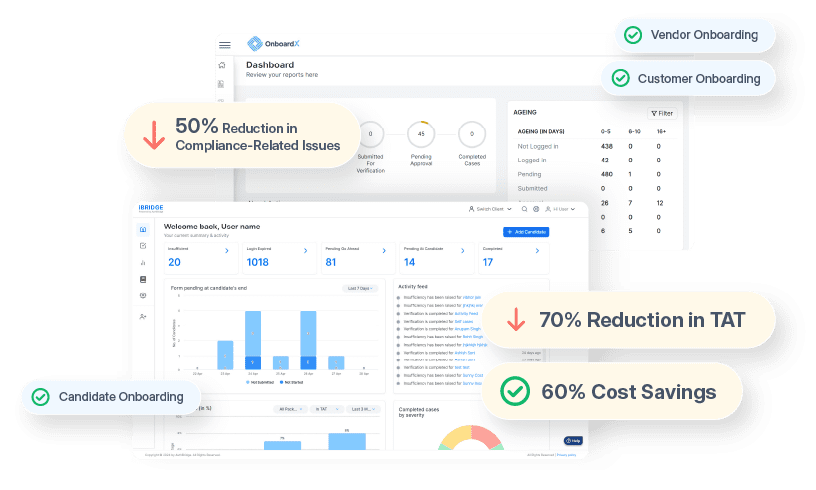
For schools outside the NSC, API-connected background screening platforms can still streamline the process by automating outreach, tracking request status, and consolidating responses into a single dashboard. What once took weeks of phone calls and fax follow-ups now happens in a fraction of the time.
Why You Need AuthBridge in Your Corner
Understanding how universities respond is one thing. Having the infrastructure to manage, track, and act on those responses at scale is another — and that’s where AuthBridge comes in.
Founded in 2005 by Ajay Trehan, AuthBridge was built from the ground up to formalize and professionalize the background verification industry. What started as a manual, paper-heavy operation has evolved into one of the most sophisticated AI-powered verification platforms available today. AuthBridge is trusted by over 3,000 clients across 140 countries, processes an astounding 15 million background checks every month, and maintains a proprietary database of over 1 billion records — all purpose-built for accurate, fast, and compliant verification.
When it comes to education verification specifically, AuthBridge’s approach is built on three pillars:
Speed. By leveraging centralized databases, direct institutional partnerships, and automated outreach workflows, AuthBridge dramatically reduces the time it takes to get verified education results — without sacrificing accuracy.
Accuracy. AuthBridge’s platform delivers nearly 100% verification accuracy by combining AI-driven data matching with human expert review. Every result comes back as confirmed, discrepancy found, or unable to verify — with documentation that holds up to scrutiny.
Compliance. Operating in a complex legal environment that includes FERPA, the FCRA, and various state-level data protection laws, AuthBridge ensures that every verification request is handled within the bounds of applicable law. Their ISO 9001 and ISO 27001 certifications reflect a commitment to quality and data security that few providers can match.
For U.S. employers navigating the verification landscape, AuthBridge’s dedicated U.S. operations team provides full-service background check solutions — from education and employment history to criminal record searches, drug screening, and driving record checks — all integrated into a single platform that connects seamlessly with your existing ATS or HRMS.
What sets AuthBridge apart from conventional background screeners is experience. With over 16 years of domain expertise and a track record serving Fortune 500 companies alongside fast-growing startups, AuthBridge doesn’t just process verification requests — they build trust infrastructure that protects your business, your brand, and your people.
Whether you’re verifying a candidate’s degree from a major research university or tracking down records from a small regional college, AuthBridge has the technology, relationships, and expertise to get it done right.
The Bottom Line
University verification is not a rubber-stamp process. Institutions have legal obligations, varied response timelines, and strict limits on what they can disclose. For employers, navigating this landscape without a knowledgeable screening partner means slower hiring, compliance risk, and a higher chance of credential fraud slipping through.
The numbers are clear: 85% of hiring managers have caught a candidate lying on a resume, and education credentials are consistently among the top falsified categories. In a hiring environment where a single bad hire can cost a company multiples of that role’s annual salary not to mention legal exposure and reputational damage — cutting corners on verification is a risk no organization can afford.
A robust background check process anchored by a trusted partner like AuthBridge isn’t a compliance checkbox. It’s a competitive advantage.