

The tech industry runs on talent. A single hire at a senior engineering or data science role can influence entire product roadmaps, systems, and teams. So when a candidate walks in claiming a computer science degree from MIT or a cybersecurity certification from a top institution, HR teams and hiring managers tend to take it at face value. After all, why would someone lie?
Before a recruiter extends an offer letter, a thorough candidate’s education verification check is no longer optional. It is a frontline defense. And with credential fraud rising at alarming rates across the US job market, the stakes in tech hiring have never been higher.
The Resume Fraud Crisis Is Real — And Growing
Let’s start with the numbers, because they are sobering.
According to a comprehensive survey by StandOut CV of over 2,100 Americans, 64.2% of employees have lied about skills, experience, or references on their resumes at least once — up from 55% in the previous year. When it comes specifically to education fraud, nearly 30% admitted to lying about their college degree, with over half of that group claiming a degree they simply never earned.
A separate survey by ResumeBuilder.com found that men are most likely to falsify education credentials (52%), followed by work tenure and years of experience. Perhaps most alarming of all: 1 in 4 background checks conducted in the US uncovers discrepancies between what a candidate claims and what can actually be verified.
For tech companies hiring software engineers, AI researchers, cybersecurity analysts, and systems architects — roles where the median salary exceeds $104,556 according to CompTIA’s State of the Tech Workforce report — a fraudulent hire is not just an HR embarrassment. It is a financial liability and a security risk.
The cost of a bad hire, according to research cited by Sterling, ranges between 15–21% of the employee’s annual salary. Multiply that across even a handful of unverified hires, and the financial exposure is significant.
Why Tech Roles Are Especially Vulnerable
The technology sector is uniquely attractive to credential fraudsters for several reasons.
First, the compensation is high. A cybersecurity analyst earns a median of $124,910 annually, and the Bureau of Labor Statistics projects 29% growth in information security jobs from 2024 to 2034. The financial incentive to fake qualifications in this space is enormous.
Second, technical skills are difficult to evaluate at face value. A hiring manager reviewing a resume may not immediately question a claimed specialization in machine learning or cloud architecture — particularly if the candidate interviews well.
Third, the rise of AI-assisted fraud has changed the playing field. Nearly 73.4% of job seekers in the US said they would consider using AI tools to help falsify their resumes in 2024. What was once a simple embellishment is now a sophisticated, AI-polished deception.
This is precisely why an employment verification check that includes thorough academic credential review is a non-negotiable part of modern tech hiring.
Education Verification vs. No Verification: What’s at Stake
| Factor | With Education Verification | Without Education Verification |
| Credential Accuracy | Degrees and certifications confirmed at source | Relies entirely on candidate honesty |
| Fraud Detection Rate | Catches up to 1 in 4 resume discrepancies | Zero detection capability |
| Hiring Risk | Significantly reduced | High — 80% of fraudsters are initially hired |
| Legal Exposure | Mitigated through due diligence | Employer bears full liability |
| Quality of Hire | Higher — verified skills match stated qualifications | Variable and unpredictable |
| Cost Implications | Upfront screening cost | Potential 15–21% salary loss per bad hire |
| Team Trust | Maintained through transparent, fair hiring | Undermined when fraud surfaces post-hire |
The data tells a consistent story: organizations that skip education verification are not saving time — they are deferring risk.
What a Robust Candidates Background Check Should Include
An candidates background check in the tech hiring context should go well beyond a quick Google search or a LinkedIn profile review. A comprehensive check for a technical hire typically covers:
- Degree verification — Confirmation from the issuing institution that the degree exists, the candidate attended, and the dates align.
- Certification validation — Particularly important for cloud certifications (AWS, Azure, GCP), cybersecurity credentials (CISSP, CEH), and specialized technical programs.
- Institution accreditation check — Confirming that the awarding body is legitimate and not a degree mill.
- GPA and field of study verification — Where required for senior or specialized roles.
- International credential evaluation — Especially critical as tech talent pipelines increasingly draw from global candidates.
Skipping any one of these layers creates a gap that a determined fraudster can exploit.
Why AuthBridge Is the Partner Tech Companies Trust
This is where AuthBridge comes in.
Founded in 2005 by Ajay Trehan, a pioneer in background screening process outsourcing, AuthBridge has built itself into one of the most trusted names in employment verification globally. With over 20 years of experience, more than 100 million verifications completed, and a client roster of 3,000+ enterprise clients including Fortune 500 organizations, AuthBridge brings a scale and depth of expertise that few organizations can match.
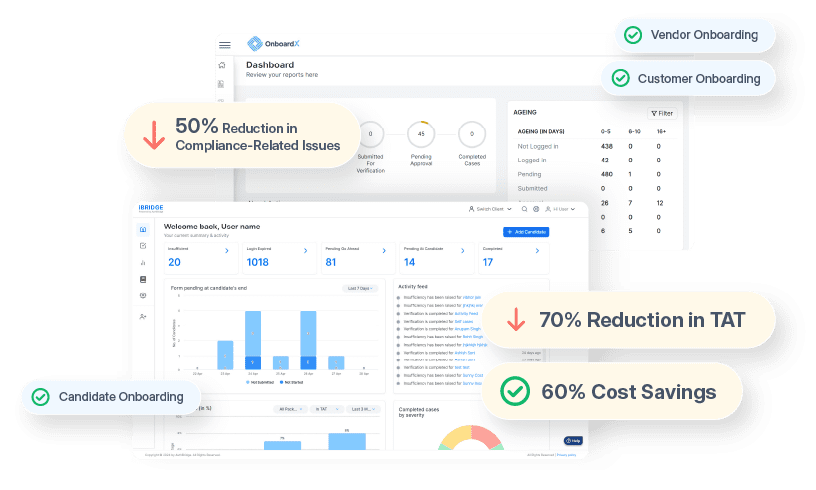
What sets AuthBridge apart is not just its track record — it is the technology behind it. Built on advanced AI and ML capabilities, AuthBridge’s platform uses face-match technologies and instant ID verification to automate personal, educational, and professional checks with a speed that doesn’t compromise accuracy. The result is an onboarding experience that is 10X faster, with operational cost savings of up to 70%.
For tech companies that are scaling fast and hiring globally, that turnaround matters. AuthBridge conducts an impressive 15 million background checks every month, operates across 140+ countries, and delivers up to 28 types of checks through a single, integrated platform — iBRIDGE — that connects seamlessly with leading HRMS and ATS systems.
The company holds ISO 9001 and ISO 27001 certifications, reflecting its commitment to quality and data security. When it comes to handling sensitive personally identifiable information, AuthBridge’s two-decade track record provides enterprises with the assurance that every data point is protected and every decision is auditable.
Whether a tech company is a high-growth startup hiring its first 50 engineers or a multinational onboarding hundreds of developers quarterly, AuthBridge scales to meet the need. The platform provides real-time dashboards, dedicated account managers, and predictive analytics — going beyond simple verification to offer actionable hiring intelligence.
The Bottom Line
In tech hiring, a resume is a starting point — not a confirmation. The consequences of taking credentials at face value can range from a mismatched hire to a full-scale security breach, depending on the seniority and access level of the role in question.
Education verification is not about distrust. It is about building a workforce on a foundation of verified truth. The numbers leave little room for debate: credential fraud is widespread, AI is making it more sophisticated, and the cost of a bad hire in a high-salary tech environment is too significant to ignore.
With a partner like AuthBridge, tech companies gain more than a background check service. They gain a verification ecosystem — fast, accurate, globally capable, and built for the demands of modern hiring. Because the best talent strategies are not just about finding the right people. They are about knowing — with certainty — that those people are exactly who they say they are.