


Introduction
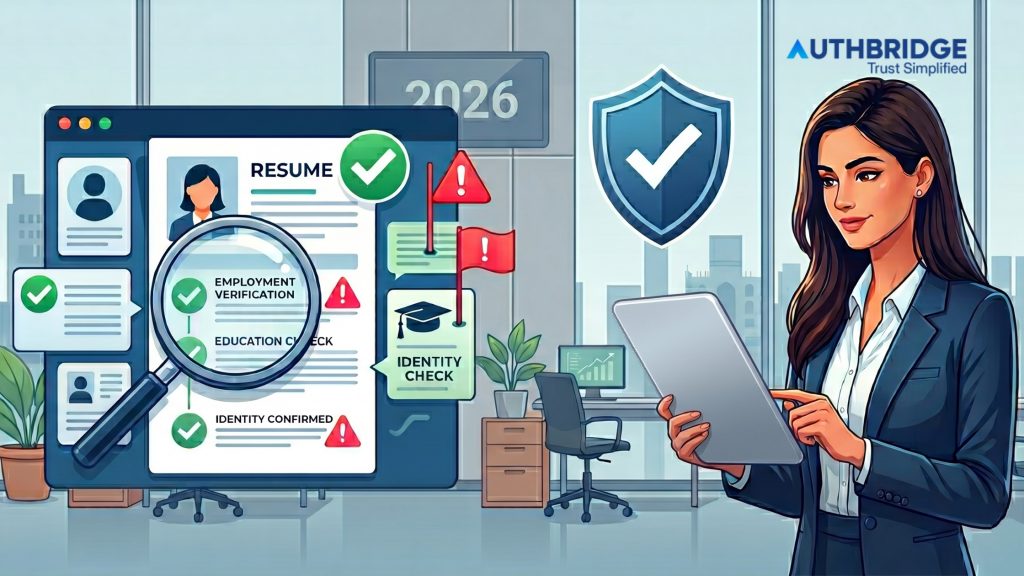
Hiring today isn’t just about finding the right candidate; it’s about ensuring the information they provide is accurate. Resume verification has become a critical step in modern hiring, especially as resume fraud continues to rise in India. Studies suggest that 30–35% of resumes contain discrepancies, ranging from exaggerated job titles to completely fabricated experience and credentials.
The impact of a wrong hire goes far beyond just rehiring. Research shows that a bad hire can cost companies at least 30% of an employee’s annual salary.
This is why resume validation and background verification are now extremely essential. By validating a candidate’s identity, employment history, and education before onboarding, organisations can reduce hiring risks, ensure compliance, and make more confident, data-backed decisions.
What is Resume Validation & What Should Be Verified?
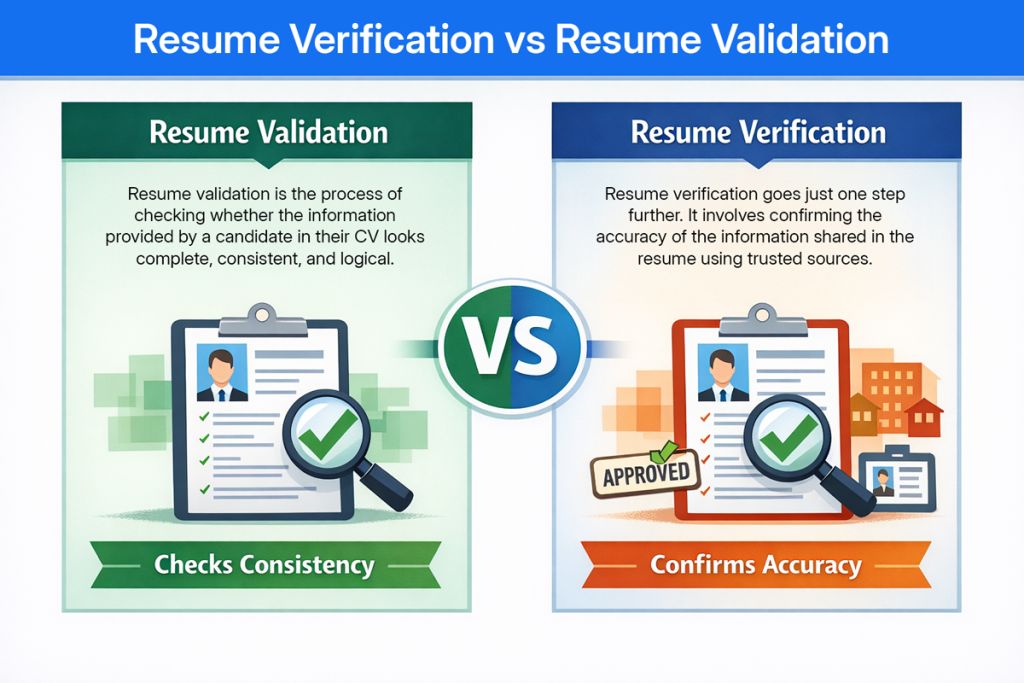
Resume validation is the process of checking the validity of information provided by a candidate in their CV. This includes details such as educational qualifications, employment history, references, skills, certifications, and any criminal records.
What Needs to Be Verified in a Resume?
a. Identity Verification
This confirms that the candidate is who they claim to be. It includes checking government-issued IDs and basic personal details.
b. Employment Verification
This involves confirming past job roles, employment dates, and responsibilities with previous employers.
c. Education Verification
This step involves verifying the academic qualifications of a candidate, such as degrees, certifications, and academic records.
d. Reference Checks
This involves speaking with past managers or colleagues to understand the candidate’s performance and behaviour at work.
Step-by-Step Resume Verification Process for HR Teams
A complete resume verification process is a series of checks that work together to reduce hiring risks.
a. Data Collection & Candidate Consent
The resume verification process begins with collecting the candidate’s details and getting their consent.
This step is extremely important because, in many cases, you cannot legally verify someone’s background without their approval.
HR teams usually collect:
- Government ID or passport details
- Address history
- Employment records
- Educational qualifications
- References
Getting accurate information at this stage is critical. If the data is incomplete or incorrect, the entire verification process can slow down or fail.
b. Identity Verification
Once the data is collected, the first check performed by organisations is identity verification.
This step ensures that the candidate is who they claim to be.
Common methods include:
- Checking government-issued IDs
- Verifying passport details
- Matching address records
- Validating digital identity
This step is important because it helps prevent cases where candidates use fake or stolen identities during hiring.
c. Education Verification
In this step, HR teams confirm whether the candidate has actually completed the qualifications mentioned in their resume.
This usually involves:
- Contacting universities or institutes
- Verifying certificates or degrees
- Confirming course completion dates
This step is important because education fraud is one of the most common discrepancies found during background checks.
d. Employment Verification
After education, the focus shifts to employment history.
HR teams verify whether the candidate’s work experience is accurate and genuine.
This includes checking:
- Past job titles
- Employment dates
- Roles and responsibilities/ KRAs
- Salary details (in some cases)
- Reasons for leaving
However, this step can be challenging because some candidates may alter dates or exaggerate roles, and previous employers may not always respond quickly.
e. Criminal Record Checks
In many roles, especially in sensitive industries, a criminal background check is also conducted.
This helps employers identify any potential risks before hiring.
Typical checks include:
- Criminal records
- Court cases
- Legal disputes
- Regulatory violations
This step is particularly important in sectors like finance, healthcare, and government, where trust and compliance are critical.
f. Reference Checks
This involves speaking with previous managers or colleagues to understand the candidate better.
These conversations help verify:
- Work performance
- Professional behaviour
- Reliability
- Work ethic
Reference checks add a human perspective to the verification process, which documents alone cannot provide.
g. Final Verification Report
Once all checks are complete, the findings are compiled into a final report.
This report highlights:
- Verified information
- Any discrepancies found
- Risk indicators
Based on this, HR teams can make a more informed hiring decision.
Resume Verification Checklist
| Verification Area | What to Check |
|---|---|
| Candidate Consent | Signed consent form |
| Identity Verification | Name, DOB, ID proof (Aadhaar, PAN, Passport |
| Address Verification | Current and permanent address |
| Employment Verification | Company names, job titles, employment dates |
| Roles & Responsibilities | Actual work done vs claimed | Salary Details | Last drawn salary (if required) | Education Verification | Degrees, certifications, course completion | Criminal Record Check | Any legal, criminal, or court history | Reference Checks | Feedback from previous managers, Reliability | Gap Analysis | Unexplained employment gaps | Final Review | All checks completed and verified |